May 08, 2026 11 min read

LFI Racing Feature · BMW F97 X3M

BrockDM’s Road to the World’s Fastest X3M

A trackside story around BrockDM’s BMW X3M, a 20/18 TRS-01 V2 forged drag-pack setup, an 8.4 kg rear drag wheel, and a stock-turbo SUV chasing deep 9-second territory.

  • BMW X3M / X3MC F97
  • LFI TRS-01 V2
  • 20x9.5 ET18 Front
  • 18x10.0 ET27 Rear
  • 8.4 kg rear drag wheel
  • 305-section drag radial support
BrockDM BMW X3M launching at Great Lakes Dragaway on LFI TRS-01 V2 forged drag wheels
BrockDM’s BMW X3M launching at Great Lakes Dragaway — the moment that shaped this 20/18 LFI TRS-01 V2 drag-pack story.
9.93 @ 136 mph milestone at Great Lakes Dragaway.
9.79 @ 140.3 mph follow-up run shared by Brock.
8.4 kg Rear forged drag wheel made for repeated launch hits.
20/18 Front brake clearance meets rear drag-radial sidewall.
Overview

Why This X3M SetupMatters

BrockDM’s X3M is the kind of build that makes people stop scrolling. It is still recognisably an X3M, still carrying BMW M weight and hardware, but it is chasing numbers that belong deep in 9-second drag territory. For LFI, the wheel brief was simple on paper and difficult in practice: keep the front brake clearance, give the rear tire real sidewall, remove weight where it matters, and make sure the wheel can keep taking launch after launch.

01

20-inch front clearance.
The front wheel stays 20 inches because the BMW M brake package is not small, and clearance cannot be treated like an afterthought.

02

18-inch rear drag architecture.
The rear wheel drops to 18 inches so the tire can carry more sidewall, bite harder, and help the car leave with more confidence.

03

8.4 kg rear wheel under launch load.
The rear TRS-01 V2 is light enough to matter, but it still has to live with the shock and torque of repeated X3M launches.

Milestone Result Setting What made it interesting
First big 9-second moment 9.93 @ 136 mph Great Lakes Dragaway The X3M left hard enough that the wheel setup became part of the story, not just part of the spec sheet.
Follow-up improvement 9.79 @ 140.3 mph BrockDM follow-up post The build kept moving forward after the first milestone, with more trap speed and an even stronger number.
LFI wheel brief 20x9.5 front / 18x10.0 rear TRS-01 V2 forged racing setup Brake clearance up front, sidewall out back, and enough wheel strength to keep coming back for another hit.
Trackside note: 9-second SUV builds move fast, and records never stay still for long. This page is not about arguing over a title forever; it is about one of the standout stock-turbo X3M builds, the milestones Brock shared, and the wheel decisions that helped make the package work.
Trackside Moments

Chasing the9-Second X3M

Brock’s X3M is not interesting only because of the numbers. It is interesting because of how calm the formula looks from the outside: a white BMW SUV, a serious tire package, and a wheel setup built around the launch. The passes below are the moments where the build started speaking for itself.

9.93 @ 136 mph: the Great Lakes Dragaway pass that put Brock’s X3M firmly into 9-second conversation.
9.79 @ 140.3 mph: the follow-up run that pushed the story past the original 9.93 milestone.
LFI builds racing wheels for controlled motorsport environments and serious performance customers. The right setup still starts with the real car: brake package, tire target, ride height, power level, road use, and where the wheel will actually be driven.
Featured Build

BrockDM BMW X3MLFI TRS-01 V2 Drag Pack

Built for a stock-turbo X3M chasing serious numbers

BrockDM’s X3M needed a wheel setup that looked simple from the outside but solved a very specific drag-racing problem. The front still needed a 20-inch wheel to clear the large BMW M brakes. The rear needed an 18-inch drag wheel so the tire could carry real sidewall and help the car leave harder.

That is why this setup became a 20/18 split package. The front protects brake clearance. The rear opens the door for a 305-section Mickey Thompson ET Street R tire. The 18x10.0 rear wheel came in at just 8.4 kg, but it still had to live with repeated launch-control hits from a very fast X3M.

The detail that matters is not only the weight. The rear barrel was CNC-mapped around caliper clearance, tire fitment, and drag use. For customers chasing similar launch behaviour, LFI can also configure knurled beads / anti-slip rings to help reduce tire movement on the rim.

  • 20-inch front brake clearance
  • 18-inch rear drag radial architecture
  • 8.4 kg rear wheel weight
  • 305-section rear tire support
  • Optional anti-slip knurled beads
  • BMW M brake clearance mapping
Wheel Architecture

Why LFI Used a20/18 Split-Diameter Package

A 20/18 X3M drag pack is not a styling trick. It is a packaging solution for a heavy AWD SUV that needs front brake clearance, rear tire compliance, predictable rollout, and low rotating mass at the end that takes the launch hit.

Front axle: keep the 20-inch brake envelope

The F97 X3M front brake package is the hard packaging limit. A smaller front wheel may help weight on paper, but it can lose caliper barrel clearance, spoke clearance, and thermal space around the brake hardware. The 20-inch front keeps the brake package honest while still allowing a lightweight forged wheel.

Rear axle: buy sidewall with an 18-inch wheel

The rear axle is where the launch is managed. Dropping to an 18-inch rear wheel creates room for a taller drag radial sidewall on the same overall tire diameter target. That extra sidewall is the mechanical buffer between launch-control torque and the track surface.

Sidewall as a driveline damper

On a hard launch, the tire does not behave like a solid gear. The sidewall deflects, the contact patch loads, and the tire can absorb the first torque spike instead of instantly shocking the track loose. That is why the rear wheel diameter matters: less rim, more tire spring.

Radial behavior needs control

A drag radial is typically more stable and lower in rolling resistance than a bias slick, but it also likes a controlled chassis and a clean hit. The wheel has to support the bead, keep the barrel clear, and avoid unnecessary mass while the tire does its work.

Dragstrip mechanics in plain English: the rear tire is the clutch, damper, spring, and contact patch all at once. More rear sidewall gives the tire time to load. Less rear wheel weight reduces the inertia the drivetrain has to accelerate. The front stays 20-inch because brakes still have to fit.
Dragstrip variable BrockDM X3M decision Mechanical reason
Front brake package 20x9.5 ET18 front Maintains barrel and spoke clearance around the BMW M front brakes. The front wheel is not where LFI wanted to chase the smallest diameter; it is where brake packaging had to stay safe.
Rear sidewall volume 18x10.0 ET27 rear Creates room for a taller rear drag radial sidewall. More sidewall lets the tire deflect under launch load, helping the contact patch load progressively instead of shocking the tire loose.
Launch hit absorption 305-section Mickey Thompson ET Street R target A drag radial with a wide footprint and race-oriented compound gives the X3M more rubber and more bite at the line, while the sidewall provides some compliance during the first hit.
Rolling inertia 8.4 kg rear forged wheel Every kilogram removed from the rear rotating assembly matters at launch. The engine and driveline are accelerating the wheel-and-tire package, not just pushing vehicle mass forward.
Effective gearing and rollout Rear tire selected around drag use, not show stance Rear tire outside diameter affects rollout and effective gearing. LFI keeps the wheel diameter smaller to allow the tire package to do the work without creating a random gearing or clearance problem.
Bead stability Optional knurled bead / anti-slip treatment Hard launches can rotate the tire on the rim, especially when pressure is lowered for track work. A knurled bead area gives the tire more mechanical bite against the wheel bead seat.
Rear barrel clearance CNC-mapped 18-inch rear barrel Not every 18-inch wheel clears the rear brake package. The barrel profile has to be mapped around caliper clearance while preserving bead seat, barrel strength, and tire fitment.
Why not 18 inches all around? because the front and rear axles have different jobs. The front needs brake clearance and stability. The rear needs sidewall, footprint, and launch compliance. The split package solves both without pretending one diameter is ideal everywhere.
Dragstrip Mechanics

What the Tire Is DoingDuring the First 60 Feet

The first 60 feet are where the wheel package earns the lap time. If the tire shocks loose, the run is gone. If the tire absorbs the hit, loads the contact patch, and keeps the SUV moving without uncontrolled spin, the rest of the pass has a chance.

01

Sidewall deflection.
The taller rear sidewall acts like a short-duration spring. It lets the tire wrap and load before it fully transfers torque to the track.

02

Contact patch growth.
Lower track pressure and rear load transfer can enlarge the working footprint. More rubber working at the same time gives the car a better chance to hook.

03

Bead and barrel control.
The tire only works if it stays indexed on the wheel. Bead-seat grip, barrel shape, and pressure choice all affect consistency pass after pass.

Engineering the Launch

Light Enough to MatterStrong Enough to Stay

A drag wheel cannot be light just for the scale photo. On Brock’s X3M, the rear wheel had to reduce rotating inertia, keep the bead area stable, support a wide radial, clear the rear brake package, and survive repeated launch-control torque spikes without turning the wheel into the fuse.

Built before it was machined

Before cutting metal, LFI works through spoke layout, pad thickness, bead seat geometry, barrel drop-center, rear caliper envelope, and hub load path. For Brock’s X3M, the goal was not simply “make it 18-inch”; it was to put strength where launch torque and tire reaction load actually enter the wheel.

8.4 kg, but not fragile

The rear wheel weight is the headline, but the real win is load-path balance. A lighter rear wheel lowers rotational inertia, while the forged structure keeps material around the hub pad, spoke roots, bead seat, and barrel transition where the drag radial pushes back into the wheel.

BrockDM BMW X3M full engine bay view showing the performance build behind the LFI drag-pack feature
Under the hood: Brock’s X3M is a serious performance build, not a wheel-only feature.
BrockDM BMW X3M BMW M Power carbon engine cover detail from the LFI racing feature
Build detail: the wheel setup was chosen around the way the car leaves, not just how it sits.
LFI’s approach is simple: keep the part light where it helps, keep material where the wheel needs it, and build around the tire, brake, pressure window, bead stability, and launch surface instead of chasing a weight number in isolation.
Fitment note: not every 18-inch wheel will clear the BMW X3M rear brake package. Brock’s setup uses a purpose-built rear barrel profile and final fitment logic. Tire model, brake package, ride height, alignment, suspension position, and intended surface should be checked before production.
TRS-01 V2

The Wheel Model BehindBrockDM’s X3M

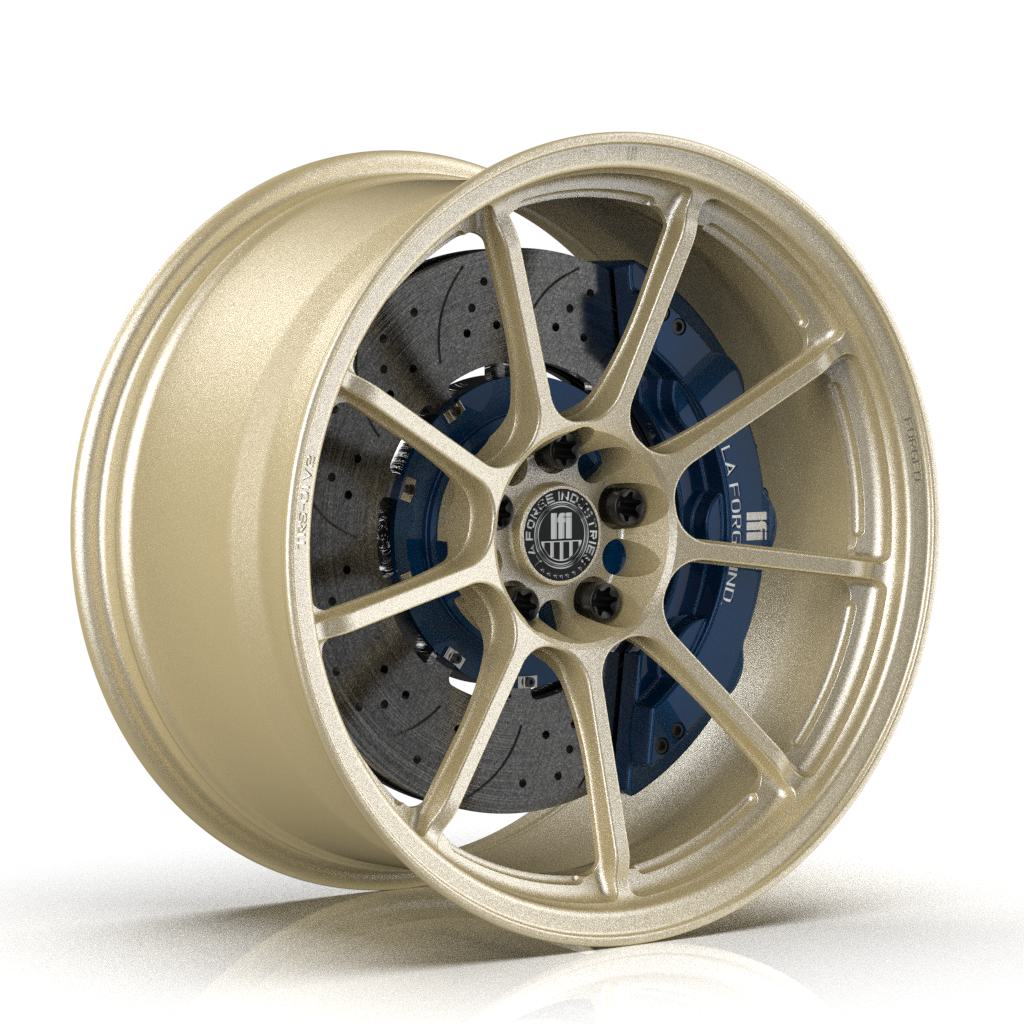
LFI TRS-01 V2 racing forged wheel product image for BMW X3M drag-pack builds

LFI TRS-01 V2 Racing Forged Wheel

The TRS-01 V2 was selected for BrockDM’s X3M because it fits the personality of the build: motorsport shape, real brake-clearance flexibility, forged construction, and the ability to become a very specific 20/18 drag-pack setup instead of a generic SUV wheel.

  • Forged 6061-T6 construction
  • Custom width and offset range
  • Brake-clearance mapping
  • Optional knurled bead treatment
  • Drag, track, and street-focused applications
Under the Hood

More FromBrockDM’s X3M

A few more looks at the X3M behind the numbers — the car, the engine bay, the drag-strip setting, and the details that make this build feel more like a story than a spec sheet.

Drag-strip launch / burnout clip: a trackside look at the environment this X3M was built around.
BrockDM BMW X3M drag-strip launch photo at Great Lakes Dragaway
Hero still: Brock’s X3M under launch load at Great Lakes Dragaway.
Related LFI Resources

Continue the X3MFitment Research

BMW X3M / X4M Fitment Guide

Use the full LFI X3M / X4M guide for road-use fitments, drag-pack logic, brake clearance, load margin, and featured customer builds.

Combined-Load FEA Article

Read the deeper engineering piece behind why LFI thinks torque, tire sidewall force, and real wheel use should be part of serious forged-wheel design.

Custom Drag-Pack Consultation

Send your brake photos, tire target, ride height, power goal, and intended surface so LFI can talk through whether a 20/18 architecture makes sense for your build.

Follow the Build

Where to SeeMore of Brock’s X3M

Source What you will find Link
BrockDM Instagram Brock’s ongoing X3M posts, drag-strip updates, and build progress. Follow BrockDM
9.79 @ 140.3 post The follow-up pass that pushed the story past the original 9.93 milestone. Watch the post
LFI Wheels Instagram LFI wheel builds, forged-wheel updates, and racing-focused customer applications. Follow LFI Wheels
LFI TRS-01 V2 product page The racing forged wheel model used for Brock’s 20/18 X3M drag-pack setup. View TRS-01 V2
LFI combined-load FEA article A deeper explanation of how LFI thinks about torque, tire force, and wheel loading. Read the article
Dragstrip Mechanics References

Why the TheoryMatches the Setup

Reference Relevant mechanic Link
Mickey Thompson ET Street R DOT street-legal drag tire, minimal tread void, tubeless construction, and race compound traction — relevant to Brock’s 305-section rear tire target. View ET Street R
Mickey Thompson radial construction notes Radial construction and reduced rolling resistance explain why a drag radial can be quick once it hooks, while still requiring a controlled launch setup. View drag radial notes
Drag slick / sidewall tech Soft drag sidewalls are used to absorb the initial launch hit and help the tire plant instead of spinning instantly. Read tire tech
Pressure and contact patch basics Air pressure changes contact patch size. Lower pressure can increase the footprint, but the correct number depends on weight, tire, suspension, and track condition. Read pressure guide
FAQ

BrockDM X3MDrag-Pack FAQ

What wheel setup did BrockDM use on the LFI X3M drag pack?

BrockDM’s LFI TRS-01 V2 setup uses 20x9.5 ET18 front wheels and 18x10.0 ET27 rear wheels. The front diameter supports BMW M brake clearance, while the rear diameter supports a taller drag radial sidewall.

How much does the rear drag wheel weigh?

The rear LFI TRS-01 V2 drag wheel on BrockDM’s X3M weighs just 8.4 kg. The point is not only the number on the scale — it is that the wheel was built for a hard-launch SUV, not a showroom display.

Why use a 20-inch front and 18-inch rear wheel on the BMW X3M?

The front stays 20-inch because the BMW M brake package needs barrel and spoke clearance. The rear drops to 18-inch because the launch tire needs sidewall. That rear sidewall acts like a mechanical buffer during the first hit, helping the tire load the contact patch instead of shocking the track loose.

Can LFI build the same BrockDM X3M drag-pack specification?

LFI can evaluate a similar X3M drag-pack specification, but final fitment depends on the exact vehicle, brake package, ride height, tire model, intended surface, and customer goals. LFI should confirm brake clearance and tire sizing before production.

What rear tire was this setup designed around?

The rear package was designed around a 305-section Mickey Thompson ET Street R-style drag radial on an 18x10.0 rear wheel. The wheel width supports the tire footprint, while the 18-inch barrel creates the sidewall height needed for launch compliance. The rear barrel was CNC-mapped for caliper clearance.

What are knurled beads / anti-slip rings?

Knurled beads / anti-slip rings are grip features machined into the bead area of the wheel. They help reduce tire movement on the rim when launch torque, lowered track pressure, and tire sidewall deflection try to rotate the tire against the wheel.

Is this setup only for drag racing?

This specific 20/18 setup is drag-racing focused. Street-focused X3M customers may prefer a square or staggered 20-inch or 21-inch forged setup depending on tire availability, ride height, brake package, and road-use priorities.

Start a Racing Build

Build an X3M Drag Pack Around Your Actual Brake and Tire Data

Send LFI your vehicle model year, brake setup, current wheel/tire data, target tire, tire outside diameter, intended pressure window, power level, launch style, drag-strip use, street-use requirement, and clearance photos. LFI will talk through whether a BrockDM-style 20/18 forged package is the right direction for your X3M.

Talk to LFI about your racing wheel build
LFI Updates

Subscribe For New Builds

New LFI forged wheel designs, Singapore build notes, engineering articles, and selected product releases.

No spam — just LFI product, engineering, and build updates.