2014 BMW 435i F32 LFI custom build ML-10 with step lip fitment
This setup gives 2014 BMW 435i F32 owners a real-world reference for stance, brake clearance, tire shoulder, and forged-wheel proportions.


 BMW 4 Series F32 / F36
Forged wheel sizing, stance, brake-clearance planning, 5x120 PCD references, 72.6 center-bore references, customer photo cases, and street-ready engineering checks for BMW 4 Series F32 coupe and F36 Gran Coupe owners.

This guide helps BMW 4 Series F32 coupe and F36 Gran Coupe owners choose forged wheels with the right stance, tire support, brake clearance, and road manners. The goal is simple: a wheel that looks right, fits properly, and feels sharp on the actual car.
Width, offset, and concavity specified to the vehicle, not pulled from a generic size chart.
Spoke profile, barrel shape, and backpad are reviewed around the exact brake package.
Lower unsprung mass can sharpen steering, braking feel, and ride control.
| Area | Guide value | Fitment note |
|---|---|---|
| PCD | 5x120 | Confirm exact vehicle before machining. |
| Center bore | 72.6 | Machine hub-centric to the confirmed car. |
| Wheel sizes | 18x8 ET18 / 19x8 ET25 / 19x8.5 ET23-25 / 19x9 ET24-29 / 19x9.5 ET33-38 / 19x10 ET40 | Review tire, brake, fender and ride height together. |
| Wheel models | SC06 / ML-10 step lip / MF101 / MF47 / LFI custom forged references | Face profile depends on brake and load target. |
This setup gives 2014 BMW 435i F32 owners a real-world reference for stance, brake clearance, tire shoulder, and forged-wheel proportions.
The primary row comes from an LFI customer fitment record. Alternate rows are reference directions only, then LFI still checks brake template, tire shoulder, load target, and the actual ride height before production.
| Direction | Wheel size | Wheel model | Best for | Notes |
|---|---|---|---|---|
| F32 photo reference | 19x9 ET29 / 19x10 ET40 | LFI custom build ML-10 with step lip | Customer-proven coupe stance | LFI customer fitment record. Confirm tire shoulder, brake template, ride height, and final offset. |
| F36 photo reference | 19x8 ET25 | LFI custom forged reference | Gran Coupe wheel and brake visual reference | Photo-backed F36 build reference. Confirm final tire pairing, ride height, and brake package before production. |
| F36 staggered road | 19x8.5 ET25 / 19x9.5 ET38 | SC06 | Balanced Gran Coupe stance | LFI customer fitment record. Confirm tire shoulder, brake template, ride height, and final offset. |
| F32 square direction | 19x9 ET24 | Base on order 2021_103 | Simple performance sizing | Spec reference only. Verify tire clearance, brake template, and suspension setup before production. |
| F36 aggressive stagger | 19x8.5 ET23 / 19x9.5 ET33 | MF101 | Stronger Gran Coupe stance | Spec reference only. Check tire shoulder, fender clearance, and ride height before production. |
| F36 daily square | 18x8 ET18 | MF47 | Daily road comfort | Spec reference only. Confirm brake clearance and tire load before production. |
Wheel fitment is more than diameter and offset. LFI reviews vertical load, braking and drive torque, spoke-root behavior, hub-pad stress, bolt-seat stress, and combined load cases before final production.
For this guide, LFI uses a verified manufacturer GAWR rating of 1260 kg, or 630 kg per wheel. The preferred customer-facing target in this table is 790 kg per wheel when the wheel family allows it.
Wheel strength is not only vertical load. LFI also reviews acceleration, braking, cornering, potholes, tire grip, hub-pad stress, bolt-seat stress, spoke-root stress, and rim-barrel torque reaction against an approximately 1,800 Nm per wheel static torque load target.
If you want the manufacturing side of the process, LFI's How LFI Wheels Are Made page shows the design, forging, CNC machining, finishing, and QC logic behind a custom forged wheel before it ever reaches the car.
| Wheel load rating | Per-axle equivalent | Margin vs axle baseline | Status | How LFI positions it |
|---|---|---|---|---|
| 690 kg | 1380 kg per axle | +10% vs 630 kg/wheel | Red - Low reserve | Use only after exact axle data, tire load, and duty cycle are confirmed. |
| 790 kg | 1580 kg per axle | +25% vs 630 kg/wheel | Green - Preferred | Road-use, fast-road, and daily forged applications. |
| 890 kg | 1780 kg per axle | +41% vs 630 kg/wheel | Blue - Extra reserve | High-speed, harsher-road, heavy tire, or extra-reserve applications. |
| Validation load case | Reference basis | Suggested LFI target | Why it matters |
|---|---|---|---|
| Radial vehicle load | Vehicle mass, passengers, tire package, and selected wheel load target | 790 kg preferred target | Represents vehicle mass and repeated road loading. |
| Torque load | Conservative 1g dry braking check with 60% front bias | ~1,800 Nm per wheel | Loads the hub pad, bolt seats, spoke roots, and rim barrel. |
| Cornering load | Lateral force from road grip, sticky tires, and fast-road or track use | Application-specific | Shows how the wheel behaves when the chassis loads sideways during aggressive cornering. |
| Combined static load case | Radial load + torque load + cornering load | Application-specific | More realistic than isolated vertical checks because real driving loads rarely occur one at a time. |
Engineering Article
For forged wheel applications, vertical load is only one part of the engineering picture. LFI also reviews spoke-root stress, hub-pad loading, bolt-seat behavior, rim-barrel stress, and combined static road-load cases where relevant.
| Term | Meaning | How it applies to LFI custom wheels |
|---|---|---|
| JWL | Japanese technical standard for light alloy wheels. | Used as a reference standard for relevant load and durability requirements. |
| VIA | Japanese third-party wheel registration and verification system. | Applies only to specific wheel models/specifications that are formally registered. |
| TUV | European technical testing or certification framework. | Applies only when a specific wheel/specification has supporting TUV documentation. |
| SAE | Common industry test framework for aftermarket wheel performance and impact evaluation. | Useful for impact and fatigue validation depending on market and specification. |
| Internal validation | LFI's own engineering and test process. | Used for bespoke specifications built from validated design families. |
| Static FEA | Computer-based engineering simulation. | Used before machining to evaluate stress, weight, torque load, and clearance. |
Selected high-volume reference specifications may be supported by external lab reporting or third-party documentation. Bespoke BMW 4 Series F32 / F36 specifications are engineered from the same design families and reviewed through LFI's internal design, load, brake-clearance, and fitment-validation process. See LFI's Testing & Compliance for published standards and test references.


This setup gives 2014 BMW 435i F32 owners a real-world reference for stance, brake clearance, tire shoulder, and forged-wheel proportions.
This F36 Gran Coupe reference shows a clean forged-wheel and brake package at 19x8 ET25. It is a useful visual reference for wheel face, brake-caliper clearance, tire shoulder, and daily-road proportions before LFI confirms the exact tire and vehicle setup for production.


This setup gives 2016 BMW F36 430 owners a real-world reference for stance, brake clearance, tire shoulder, and forged-wheel proportions.
This is an actual LFI customer build record. Installed photos will be added once the customer provides them.
This setup gives 2014 BMW 4 Series F32 owners a real-world reference for stance, brake clearance, tire shoulder, and forged-wheel proportions.
This is an actual LFI customer build record. Installed photos will be added once the customer provides them.
This setup gives 2018 BMW 420i GC owners a real-world reference for stance, brake clearance, tire shoulder, and forged-wheel proportions.
This is an actual LFI customer build record. Installed photos will be added once the customer provides them.
This setup gives 2019 BMW 420i Grand Coupe F36 owners a real-world reference for stance, brake clearance, tire shoulder, and forged-wheel proportions.
This is an actual LFI customer build record. Installed photos will be added once the customer provides them.
This recorded LFI customer specification documents the final wheel model, size, offset, PCD, and centre-bore direction for this vehicle.
Final tyre pairing, ride height, hardware seat, centre-cap fitment, brake template, and load target are confirmed against the actual car before production. No approved full-car or installed-on-car photos are available for this case yet, so it remains a specification reference.
These wheel models are selected around the vehicle type instead of a generic forged-wheel fallback.

Responsive lightweight road and track fitments.
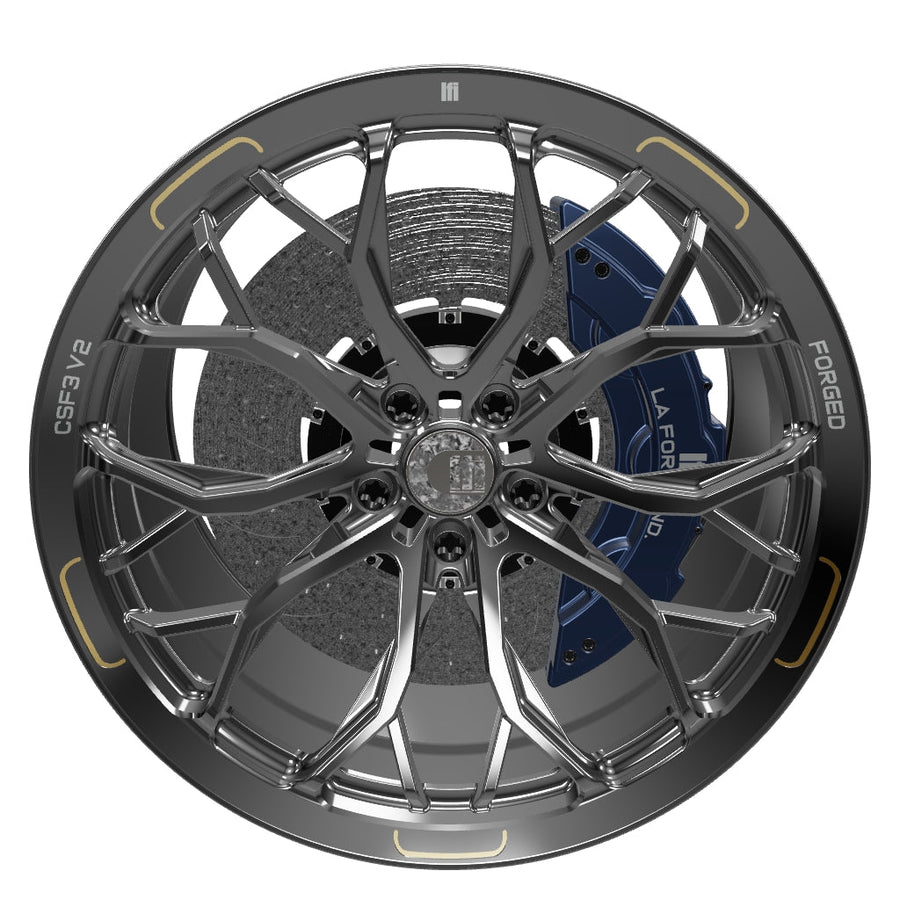
Clean performance styling for compact and daily builds.

Lightweight forged response with broad brake-clearance flexibility.
LFI supports BMW 4 Series F32 / F36 customers with vehicle-specific forged wheel consultation, DDP supply where available, and direct Singapore / Malaysia support. Fitment recommendations are based on the confirmed vehicle, brake package, tyre target, load requirement, and intended use.
LFI helps owners choose between OEM+, lightweight square, brake-clearance, show-style, and track-focused forged setups.
City roads, highways, potholes, wet-weather tires, ride comfort, and tire availability can all change the best wheel and tire recommendation.
LFI offers Duty Paid Shipping (DDP) to major markets, so eligible customers pay the confirmed landed price with no extra import tariffs or taxes due on delivery.
Singapore customers can visit LFI at 76 Playfair Road, #01-03, Singapore 367996 to view forged wheel samples, finishes, concavity profiles, and selected in-stock wheels.
Malaysia customers can order directly with LFI and request pre-production consultation for road use, track use, tire availability, and brake clearance.
| Reference | What it supports | Link |
|---|---|---|
| BMW Owner Manuals | Vehicle owner documentation for tire pressure, axle-load label context, and model-year reference. | BMW Owner Manuals |
| JWL / VIA Wheel Standards | Japanese light-alloy wheel standard and third-party verification context for JWL / JWL-T marking and VIA registration. | Japan Light Alloy Automotive Wheel Testing Council |
| TUV SUD Wheel Testing | Independent laboratory testing context for wheels, materials, components, fatigue testing, impact testing, and international wheel standards. | TUV SUD Wheel Testing |
| Standards Testing Laboratories | Automotive wheel test-lab context for fatigue, impact, load / deflection, and compliance-related validation. | STL Testing Services |
| SAE J2530 | Aftermarket passenger-car and light-truck wheel performance requirements and test-method context. | SAE J2530 |
Yes. The case studies are based on real LFI forged-wheel customer projects and fitment records.
Recorded LFI references point to 5x120 PCD. LFI confirms the exact vehicle before machining.
Recorded hub-bore references show 72.6. LFI confirms the hub-centric machining value against the actual car before quoting or production.
Common directions in this guide include 19x8.5 ET25 / 19x9.5 ET38, 19x9 ET29 / 19x10 ET40, and 19x8 ET25. Final tire pairing and clearance still need review.
Yes, when the offset, brake clearance, and body clearance are engineered into the forged wheel specification.
Some recorded builds have full specification value while customer images are still pending.
Send the model year, trim, brake package, tyre target, ride height, alignment notes, PCD, hub bore, hardware seat, centre-cap plan, finish, load target and intended use.
Yes. LFI supports local Singapore and Malaysia customers and ships forged wheels internationally with fitment consultation.
Yes. The photos are fitment references. LFI can quote gloss, satin, brushed, polished, bronze, black, silver, and custom finishes depending on the wheel design.
No. The photographed setup is a proven reference point, but LFI can adjust width, offset, concavity, finish, and tire pairing around your car and goals.
Brake clearance depends on the caliper template, barrel profile, spoke shape, backpad, and final offset. LFI checks these before machining.
Yes. A comfort-biased setup can use a more conservative width, sensible offset, and tire sizing with enough sidewall for road use.
Yes, but fender clearance, steering clearance, tire shoulder, ride height, and alignment need to be checked together.
Often yes, if the cap diameter, clip style, pocket depth, and face profile are planned before production.
Yes. Square setups are popular when owners want easy tire rotation, predictable handling, and a clean road-use package.
Yes. Staggered setups can work when the platform, tire diameter, and drivetrain requirements support it.
Two tires with the same printed size can sit differently. Shoulder shape affects fender clearance, steering clearance, and the final stance.
Offset only tells part of the story. Width, tire size, brake clearance, hub geometry, concavity, and ride height all affect whether the setup works.
Yes. LFI supports international forged-wheel orders and can prepare fitment consultation remotely before production.
Share your model year, brake package, tire target, ride height, alignment, center-cap plan, and finish target so LFI can confirm the forged wheel specification.