


Architecture
A monoblock forged wheel built around your car: width, offset, brake clearance, load target and finish all specified together, not corrected later.


The lightest monoblock forged wheel LFI builds. Built around useful mass: Takumi Beam™ spoke architecture, custom sizing, real brake clearance and the fitment your car actually needs.

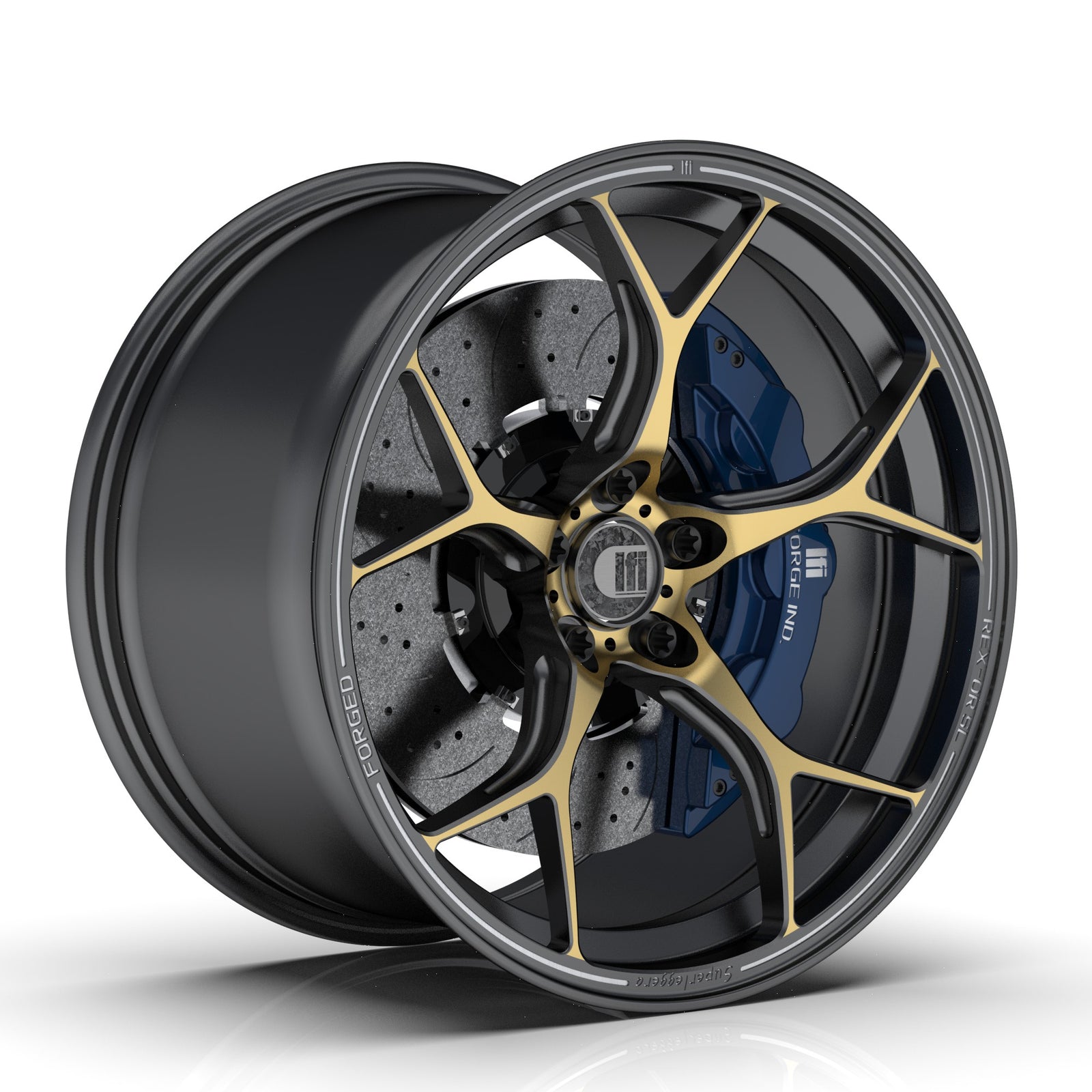
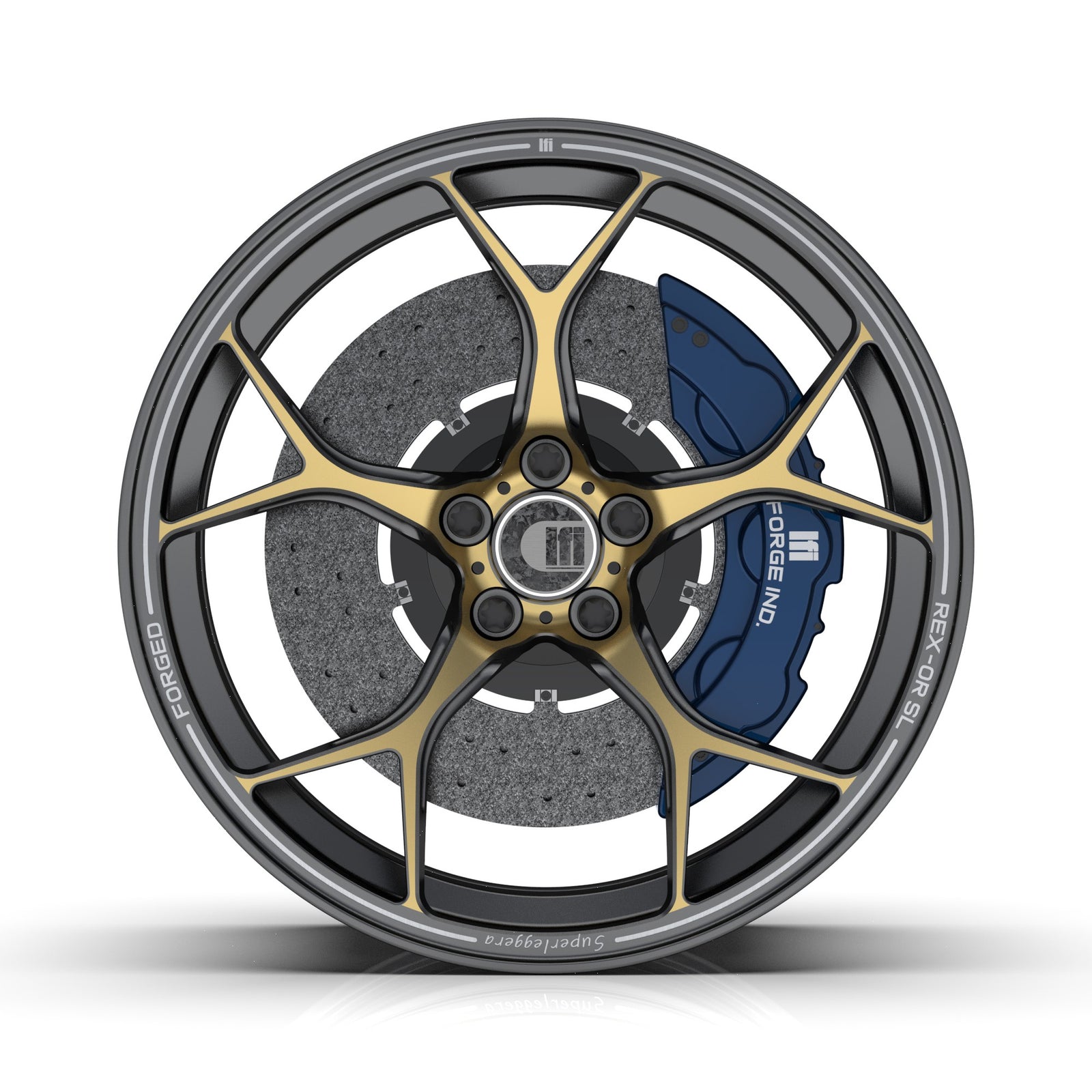
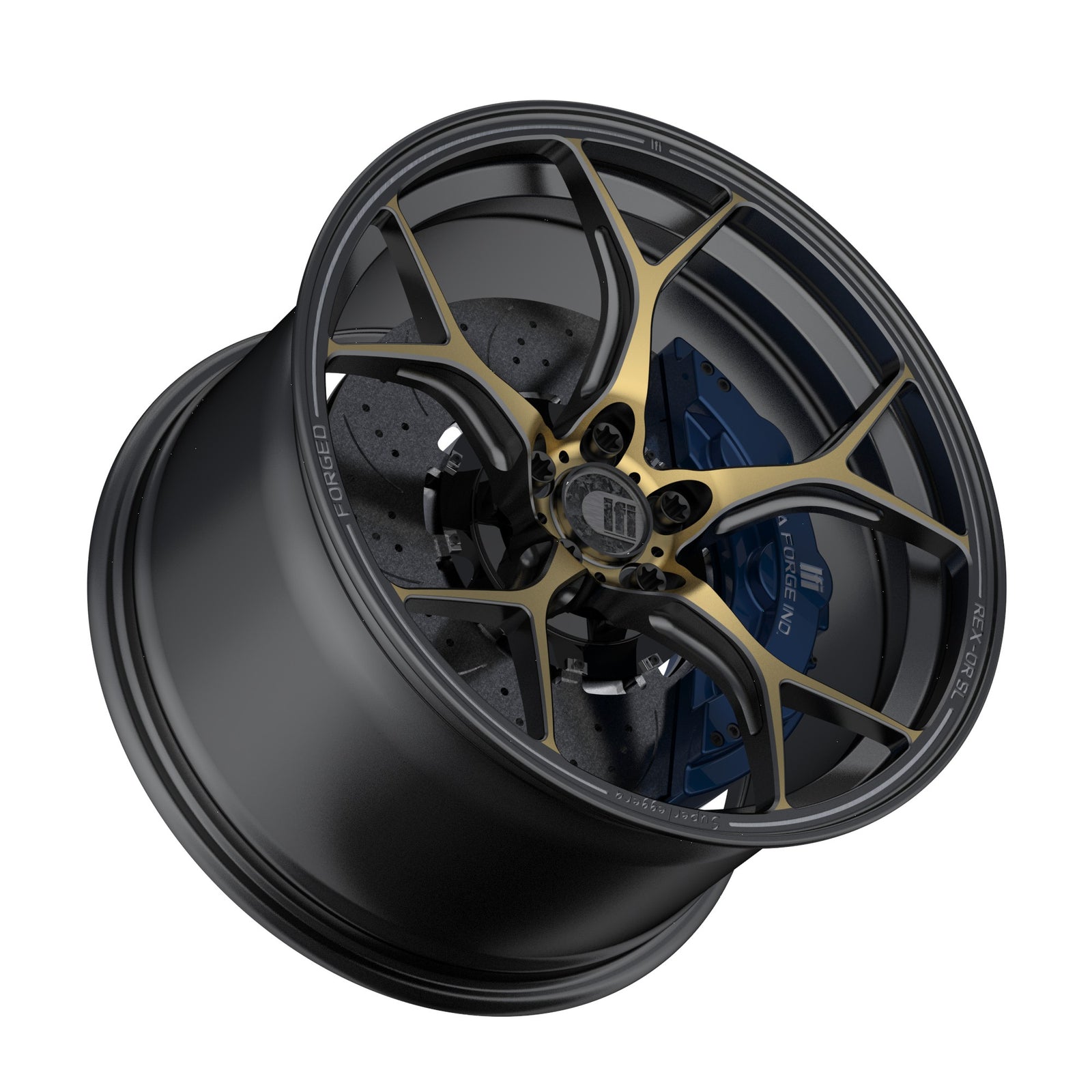
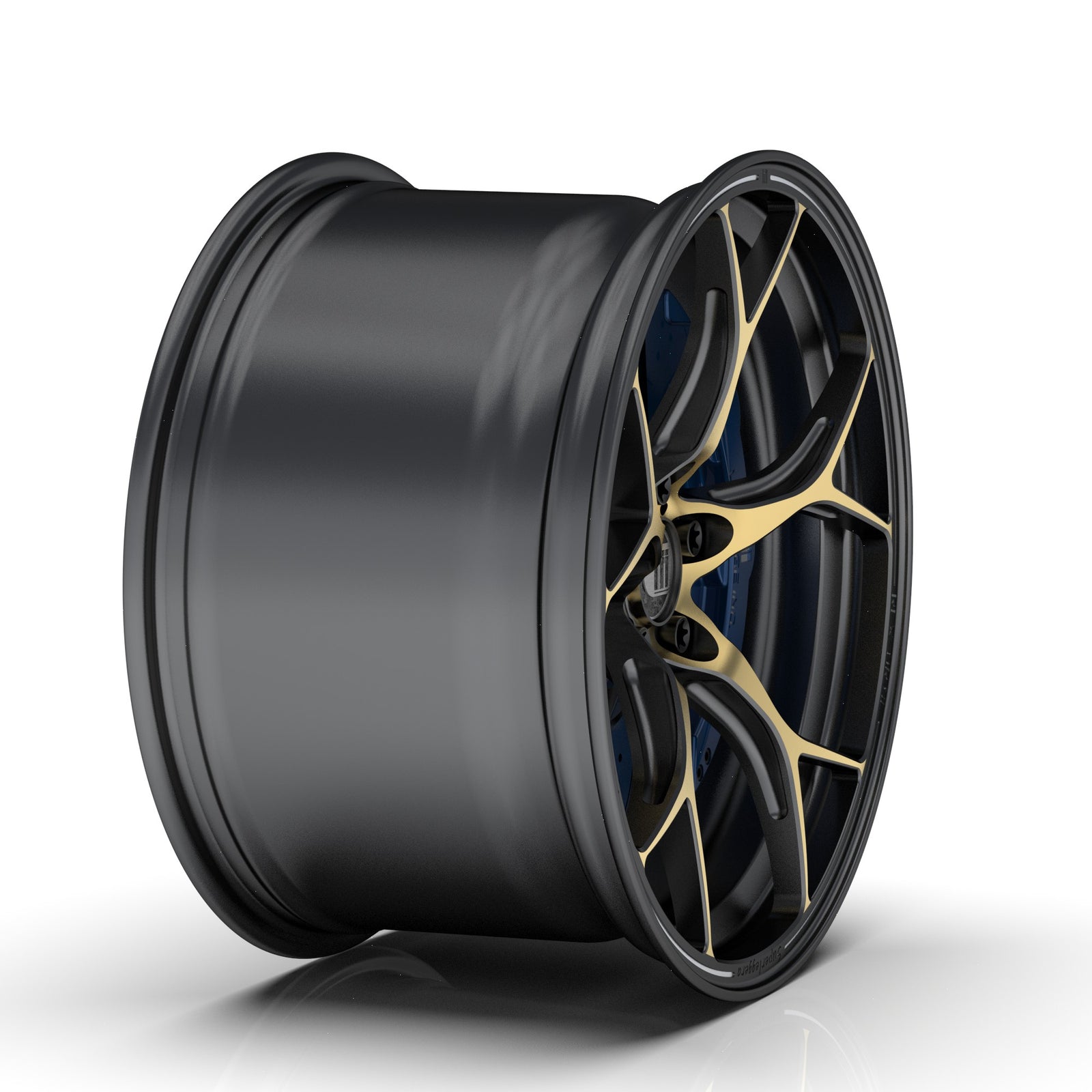
Long-shaft Y spokes over a deep forged barrel, built around useful mass instead of decorative subtraction.
Shown with brake package for scale; final diameter, width, offset and clearance are built around your car.
A monoblock forged wheel built around your car: width, offset, brake clearance, load target and finish all specified together, not corrected later.
The 18x10.5J ET45 reference specification is approximately 7.3 kg per wheel. The 17x7J reference is approximately 5.6 kg per wheel.
Takumi Beam is LFI's asymmetric main-spoke architecture. It removes low-value centre mass while keeping the spoke depth and flange support that carry bending load.
Drivers who want low mass, proper brake clearance and a wheel specced around their car, not adapted after the fact.
The REX-0R Superleggera is built around one principle: every gram has to earn its place.
This is not about removing material blindly. The REX-0R uses a long-shaft Y spoke, deep pocketing, backpad reduction, Counter-Lip rim reinforcement and Takumi Beam™ spoke architecture to put aluminium where it works and take it out where it does not.
29% less local mass. 87% stiffness retained. 22% more stiffness per gram.
0.714 mass retained after 28.6% local mass reduction; approximately 21.7% higher stiffness per gram.
This is not lightness by subtraction. This is lightness by structure.
Some wheels are designed to look light. The REX-0R is engineered to be light where it actually matters: the spokes, the barrel and the way the whole wheel carries load from hub to rim.
Taking material off a wheel does not automatically make it better. Cut from the wrong place and you have made it weaker. Leave it in the wrong place and you are carrying dead weight. The REX-0R is built around the line between those two.
At the 18x10.5J ET45 reference fitment, the REX-0R Superleggera is approximately 7.3 kg per wheel. In the 17x7J reference build, it is approximately 5.6 kg per wheel. Final mass still changes with width, offset, bolt pattern, brake clearance, load target and machining depth.
The name comes from the Japanese kanji 工, a character tied to craft, making and engineered work. Look at it sideways and it already reads like a beam: top flange, vertical web, bottom flange. Takumi Beam™ takes that shape and makes it structural: narrow on the visible face, supported on the brake side, hollowed where the centre mass does less work.
Deliberate shaping. Not decorative cutting.
Compared with a solid tapered spoke section of the same outer envelope, the reference profile removes about 28.6% of local mid-section mass while retaining about 86.9% of local bending stiffness. Less wasted aluminium. More structural performance from every gram.
Bending stiffness scales strongly with section depth. The useful gain comes from keeping depth while removing centre mass that does less work.
A symmetric I-beam is already efficient, but it has limits. Thin the web too much and stress starts to concentrate near the spoke root.
Takumi Beam™ flips the approach. The section is deliberately asymmetric: narrow on the visible face to save weight, wider on the brake side where the load path needs more structure. Same depth. Less centre mass. The result is a spoke that is more efficient, not just lighter.
That is the difference between a decorative pocket and an engineered spoke.
A wheel does not just need to survive load. It needs to resist movement.
Unsupported length matters fast. Shortening the flexible split region helps keep the rim controlled under cornering load.
Under cornering, the tyre tries to tilt the rim away from the hub. If the spokes allow that movement, the wheel gives away precision: camber shifts, turn-in softens and the contact patch gets vague.
Most split-spoke wheels divide early near the hub, creating two long, slender branches all the way to the rim. It can look elegant. Structurally, it leaves the longest unsupported span as the most flexible part of the wheel.
The REX-0R reverses that logic. One deep Takumi Beam™ main spoke carries the load most of the way to the rim before splitting into two short, wide-angle branches. The long section stays stiff. The split section stays short and braced.
Same visual family. Different engineering priority.
The fork is a brace, not a flourish. Where the spoke splits, the two branches and the rim arc between them close into a wide structural triangle. A narrow, near-parallel fork bends like two long cantilevers. Widen the angle and shorten the branches, and it starts behaving like a braced frame: far stiffer under drive and brake torque.
Once the branch is long relative to its section, bending stiffness falls away. A wider, shorter fork shifts more work into axial tension and compression.
This is the kind of detail radial-only simulation never catches. The wheel looks settled until you add real torque. Then stress piles at the spoke root. The wide fork answers it directly: two well-separated rim-side branch feet share the torque reaction across a broader base.
And it stays composed. A stiff structure with its mass kept inboard pushes resonances away from the low-frequency, high-energy range of cornering and braking. Less flutter. Steadier feel. Stiffness you can measure becomes confidence you feel through the wheel.
Higher stiffness and lower participating mass help move relevant resonances away from the harsh cornering-and-braking range.
Real wheels do not see one load at a time. Vehicle weight, cornering, braking, drive torque and tyre pressure all overlap. Lightweight wheels often fail not from the obvious load, but from the interaction between loads. The REX-0R is shaped around that interaction.
The point is overlap: the wheel has to stay controlled when the loads arrive together, not only in a single radial check.
The long Takumi Beam™ main spoke controls the primary span. The short split branches brace the rim. The side-beam pocketing removes mass while preserving root support. The Counter-Lip reinforces the rim edge where movement wants to collect.
Every feature has a load-path reason.
The REX-0R Superleggera is not trying to be the thinnest-looking wheel in the catalogue. A long, delicate split-spoke design can be beautiful. It can also add a small amount of compliance that some drivers may prefer on a show-focused or comfort-focused build.
The REX-0R chooses a different priority. It gives more structure to the main spoke because that is where the stiffness lives. It splits late because that keeps the compliant branch length short. It uses Takumi Beam™ because the same mass can be made to work harder when the section follows the load path.
For a car built to be driven hard, that is the right trade. The wheel should hold the geometry the chassis was designed around. Not add softness of its own.
As a Founder Edition, the REX-0R is built the way LFI would build a wheel for its own car: no unnecessary material, no spacer dependency, no compromises to simplify fitment.
Every set is forged and machined around your specific vehicle: diameter, width, offset, brake clearance, load target, bolt pattern, centre bore, concavity and finish.
The geometry is not adapted after the fact. It is built around the car from the start.

One deep Takumi Beam™ main spoke carries the load most of the way to the rim before splitting into two short, wide-angle branches.
The long span stays stiff. The soft region stays short.

The main spoke uses an asymmetric 工-section with a narrow upper flange, central web, and wider lower flange.
The latest mid-section reduces local mass by approximately 28.6% while retaining approximately 86.9% of local bending stiffness, delivering approximately 21.7% higher stiffness per gram.

The spoke-to-barrel transition is hollowed along its length to reduce mass while preserving the outer structure that supports bending load.
Weight leaves the centre. Structure stays at the shell.

The backpad is pocketed around the lug seats to remove mass from behind the bolt circle while preserving the hub-mating and clamp-load surfaces.
The wheel saves weight without compromising the surfaces that keep it centred, clamped, and true.

A secondary forged bead sits just inboard of the outer rim flange.
It reinforces the edge where displacement concentrates under lateral and impact load, allowing the surrounding barrel wall to remain lighter without giving up rim-edge support.

The REX-0R Superleggera is evaluated under combined radial, lateral, torque, and tyre-pressure load.
Structural validation and per-corner mass are documented for the final specification.

Displacement is reviewed with the load cases working together, not as an isolated radial-only check.
The Counter-Lip braces the rim edge where movement wants to collect.
Approximate weight excludes centre cap and valve. Final weight changes with width, offset, bolt pattern, brake clearance, load target, and machining depth.
| 16 inch Weight |
17 inch Weight |
18 inch Weight |
19 inch Weight |
20 inch Weight |
21 inch Weight |
|---|---|---|---|---|---|
| 16x5.5J4.5 kg / 9.9 lbs | 17x5.5J5.2 kg / 11.5 lbs | 18x6.5J6.1 kg / 13.4 lbs | 19x7.5J7.1 kg / 15.7 lbs | 20x6.5J7.4 kg / 16.3 lbs | 21x8.0J8.5 kg / 18.7 lbs |
| 16x6.0J4.7 kg / 10.4 lbs | 17x6.0J5.3 kg / 11.7 lbs | 18x7.0J6.3 kg / 13.9 lbs | 19x8.0J7.2 kg / 15.9 lbs | 20x8.0J7.9 kg / 17.4 lbs | 21x8.5J8.7 kg / 19.2 lbs |
| 16x6.5J4.8 kg / 10.6 lbs | 17x6.5J5.5 kg / 12.1 lbs | 18x7.5J6.4 kg / 14.1 lbs | 19x8.5J7.4 kg / 16.3 lbs | 20x8.5J8.0 kg / 17.6 lbs | 21x9.0J8.8 kg / 19.4 lbs |
| 16x7.0J5.0 kg / 11.0 lbs | 17x7.0J5.6 kg / 12.3 lbs | 18x8.0J6.6 kg / 14.6 lbs | 19x9.0J7.5 kg / 16.5 lbs | 20x9.0J8.2 kg / 18.1 lbs | 21x9.5J9.0 kg / 19.8 lbs |
| 16x7.5J5.1 kg / 11.2 lbs | 17x7.5J5.8 kg / 12.8 lbs | 18x8.5J6.7 kg / 14.8 lbs | 19x9.5J7.7 kg / 17.0 lbs | 20x9.5J8.3 kg / 18.3 lbs | 21x10.0J9.1 kg / 20.1 lbs |
| 16x8.0J5.3 kg / 11.7 lbs | 17x8.0J5.9 kg / 13.0 lbs | 18x9.0J6.9 kg / 15.2 lbs | 19x10.0J7.8 kg / 17.2 lbs | 20x10.0J8.5 kg / 18.7 lbs | 21x10.5J9.3 kg / 20.5 lbs |
| 17x8.5J6.1 kg / 13.4 lbs | 18x9.5J7.0 kg / 15.4 lbs | 19x10.5J8.0 kg / 17.6 lbs | 20x10.5J8.6 kg / 19.0 lbs | 21x11.0J9.4 kg / 20.7 lbs | |
| 17x9.0J6.2 kg / 13.7 lbs | 18x10.0J7.2 kg / 15.9 lbs | 19x11.0J8.1 kg / 17.9 lbs | 20x11.0J8.8 kg / 19.4 lbs | 21x11.5J9.6 kg / 21.2 lbs | |
| 17x9.5J6.4 kg / 14.1 lbs | 18x10.5J7.3 kg / 16.1 lbs | 19x11.5J8.3 kg / 18.3 lbs | 20x11.5J8.9 kg / 19.6 lbs | 21x12.0J9.7 kg / 21.4 lbs | |
| 17x10.0J6.5 kg / 14.3 lbs | 18x11.0J7.5 kg / 16.5 lbs | 19x12.0J8.4 kg / 18.5 lbs | 20x12.0J9.1 kg / 20.1 lbs | 21x12.5J9.9 kg / 21.8 lbs | |
| 17x10.5J6.7 kg / 14.8 lbs | 18x11.5J7.6 kg / 16.8 lbs | 19x12.5J8.6 kg / 19.0 lbs | 20x12.5J9.2 kg / 20.3 lbs | 21x13.0J10.0 kg / 22.0 lbs | |
| 17x11.0J6.8 kg / 15.0 lbs | 18x12.0J7.8 kg / 17.2 lbs | 19x13.0J8.7 kg / 19.2 lbs | 20x13.0J9.4 kg / 20.7 lbs | ||
| 18x12.5J7.9 kg / 17.4 lbs | |||||
| 18x13.0J8.1 kg / 17.9 lbs |
| Specification | REX-0R value | Fitment note |
|---|---|---|
| Model | LFI REX-0R Superleggera Founder Edition | Custom forged wheel built around the vehicle brief. |
| Construction | Monoblock forged aluminum wheel | One-piece forged layout for low mass and direct response. |
| Material | 6061-T6 forged aluminum | Final machining depth changes with size, offset and load target. |
| Forging | 12,000-ton forged construction | Used as the base forging process before vehicle-specific machining. |
| Diameter range | 16 to 21 inch | Diameter is selected with brake clearance, tire package and vehicle use. |
| Width range | 7J to 13J | Width is matched to tire support, fender clearance and concavity. |
| Offset range | ET -15 to +55 | Offset is reviewed with brake envelope, hub position and face depth. |
| Load target | Up to 890 kg per wheel | Load target is confirmed against the vehicle and driving use. |
| Reference mass | 7.3 kg at 18x10.5J ET45 | Reference mass, not a universal claim for every final specification. |
| Small-size reference mass | 5.6 kg at 17x7J | Smaller and narrower specifications can be lighter. |
| Brake clearance | Built to order | Spoke profile, backpad and barrel shape are checked around the caliper. |
| Spacers required | None | The target is to machine the wheel around the car instead of relying on spacer correction. |
| Validation method | Combined-load FEA | Radial load, lateral load, torque and tire pressure are reviewed together. |
| Final specification | CAD mass, brake clearance and structural validation documented for the final build | Final data is tied to the confirmed vehicle specification. |
REX-0R is not a thin-spoke styling exercise. It is a lightweight monoblock forged wheel where spoke section, barrel support, rim edge and fitment are specified together.
| Decision area | Typical aftermarket approach | REX-0R Superleggera direction |
|---|---|---|
| Weight target | Often reduced through visual spoke thinning or broad material removal. | 7.3 kg at 18x10.5J ET45 reference, with final mass confirmed to the vehicle specification. |
| Spoke architecture | May split early into long branches that look delicate but add compliance. | Long-shaft Y spoke with Takumi Beam main section and a late split to keep the flexible region short. |
| Rim and barrel support | Lightness can compete with bead-edge and barrel reserve. | Counter-Lip rim edge, side-beam pocketing and backpad pocketing work as one load path. |
| Fitment method | Generic sizing can need spacer correction after purchase. | Width, offset, centre bore, bolt pattern, brake clearance, load target and concavity are planned before machining. |
| Best use case | Style-led daily use or broad catalogue fitment. | Road, performance and track-minded builds where low mass, brake clearance and exact fitment all matter. |
LFI plans each REX-0R set from Singapore around the car's brake package, tyre target, ride height, offset window, load target, centre bore and finish direction.
US and international customers can order in English through WhatsApp or email. Send vehicle photos, brake details, current wheel and tyre sizes, ride height, fitment goals, intended use and delivery ZIP/postcode. LFI confirms the REX-0R specification remotely, supports DDP shipping where available, and coordinates production updates before dispatch.
REX-0R is strongest where low wheel mass, brake room, tyre support and exact wheel position all matter. Think lightweight sports cars, big-brake coupes and fast-road builds where the wheel has to disappear under load, not just look light in a catalogue.
Mazda MX-5, Toyota GR86, Toyota GT86, MINI Cooper, Lotus Elise and Lotus Exige builds benefit from lower unsprung mass, sharper steering response and a wheel package that keeps tyre position disciplined.
Honda Civic Type R, Golf R and similar fast-road platforms suit REX-0R when brake clearance, tyre support and clean fender placement need to work together rather than compete.
Porsche 911, Audi RS5, BMW M3 and M4, Mercedes-AMG GT and similar cars are a natural match when the goal is a lighter forged wheel without sacrificing brake envelope or load reserve.
For heavier platforms like smart #1 and Tesla Model 3, a load-rated LFI spec can still save meaningful weight. If maximum duty reserve is the priority, another LFI construction may suit better.
REX-0R is built around lightweight structure, brake room and fitment discipline. These articles explain the engineering checks behind that brief before the wheel is cut.
How kilograms per wheel, axle load and load margin decide whether a lightweight forged wheel is suitable for the car.
What JWL, VIA and TUV SUD references prove, what they do not prove, and how to read a test claim properly.
Why fatigue cracks, impact damage, spoke separation and hub clamping issues are prevented by specifying the wheel around the load case.
Why caliper clearance and no-spacer fitment have to be planned in the wheel drawing, not corrected after delivery.
These are real Google review excerpts from LFI custom forged wheel customers, not REX-0R-only reviews. They support the same buying decision: measured fitment, proper advice and wheels built around the car.
I reached out to LFI for a set of wheels for my BMW X3M. I was looking for a clean motorsport look with an ultimate goal of lightweight. After some back and forth I landed on a set of TRS01 in a 20"/18" combo. Delivery took roughly 7.5 weeks from the date of my order and everything arrived sound.
Google reviewFantastic designs, even greater people behind the company. Kevin and Joshua are amazing people who give really good advice on the looks, cuts, sizing and offsets. They are good with how to build the best mechanically appropriate rims for your car.
Google reviewFantastic designs, quality, and delivery time. This is the second set of custom rims I've made with them and the results are awesome both times. The fitment is always perfect. So, no need for spacers.
Google reviewREX-0R is a Founder's Edition forged wheel and is covered for 2 years upon delivery or collection against defects in structural integrity, subject to LFI warranty terms.
REX-0R is not chosen only by diameter and PCD. Width, offset, centre bore, brake envelope, load target, tyre package, concavity and finish are treated as one specification, so the wheel is drawn around the car instead of corrected with spacers after purchase.
Use the table as a weight map, not a universal claim for every set. The 17x7J reference is approximately 5.6 kg and the 18x10.5J ET45 reference is approximately 7.3 kg; final mass moves with width, offset, bolt pattern, brake clearance, load target and machining depth.
Takumi Beam uses an asymmetric I-section with a narrow wheel-face flange, central web and wider brake-side flange. The mid-section removes about 28.6% local mass while retaining about 86.9% of local bending stiffness, improving stiffness per gram by about 21.7%.
The caliper envelope is considered with spoke face, backpad, barrel profile, offset and concavity. That allows clearance to be built into the wheel geometry instead of pushing the wheel outward after the fact.
The load target, tyre width, brake heat package, bead-seat needs and optional reinforcement details get more conservative. Knurled beads and annular barrel ribs can be specified when grip level, kerb use, launch load or braking torque justify the extra reserve.
More width and lower offset can create deeper face depth, but the final profile still has to clear brakes, keep tyre position sensible, maintain hub registration and meet the load target. REX-0R uses the concavity window that works for the whole vehicle package.
Yes. It is a lightweight road-capable forged wheel with track-minded engineering. The useful specification depends on how the car is driven: daily road use can prioritise clean fitment and ride discipline, while track use adds more margin for load, tyre and brake behaviour.
Singapore builds can be planned directly with LFI. US and international customers can order in English through WhatsApp or email by sending vehicle photos, brake details, current wheel and tyre sizes, ride height, fitment goals, intended use and delivery ZIP/postcode. LFI confirms the REX-0R specification remotely and can quote DDP shipping where supported.
REX-0R suits lightweight sports cars, compact performance cars and big-brake road or track builds where low mass, tyre support and exact wheel position matter. Mazda MX-5, Toyota GR86 and GT86, Honda Civic Type R, MINI Cooper, Lotus Elise and Exige, Porsche 911, Audi RS5, BMW M3 and M4, and Mercedes-AMG GT are natural examples. Heavier EV or SUV applications should use a load-appropriate LFI specification.
Yes. REX-0R is a Founder's Edition forged wheel, and LFI's warranty page states that Founder's Edition forged wheels are covered for 2 years upon delivery or collection against defects in structural integrity. See the LFI warranty page for full terms and exclusions.
Share the vehicle model, current wheel and tyre sizes, brake package or caliper clearance details, ride height, intended use, preferred stance, finish direction and any load or track-use requirements. LFI uses that brief to propose width, offset, centre bore, brake clearance and tyre pairing before the wheel is made.
The REX-0R Superleggera is forged to your car’s load, brake package, width, offset and clearance. Every gram with a purpose stays. Every gram without one leaves.