


Anti-Slip Knurled Beads
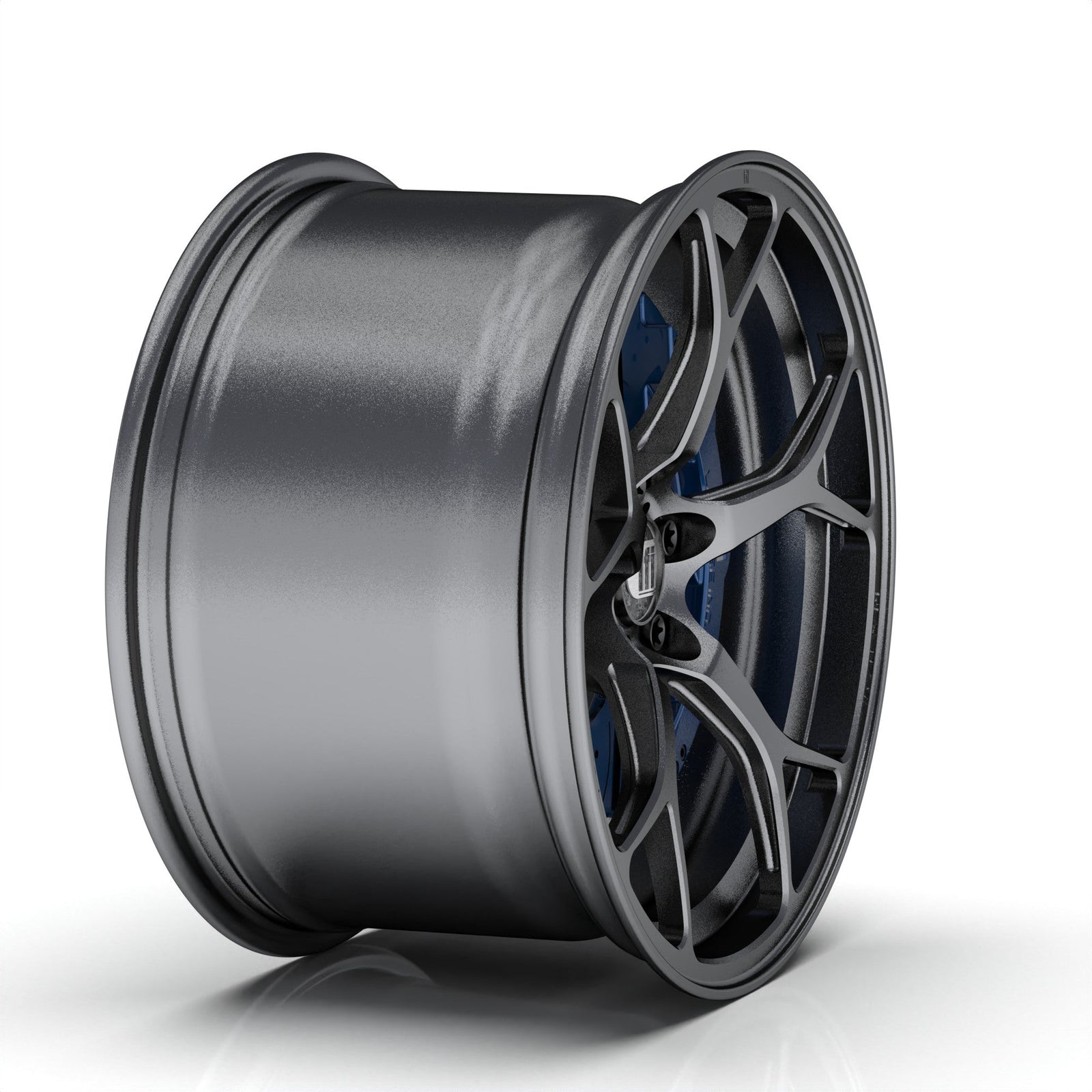
Optional knurled bead seats help reduce tyre movement on high-grip applications, including track use, hard braking, drag launches, and sticky tyre setups.


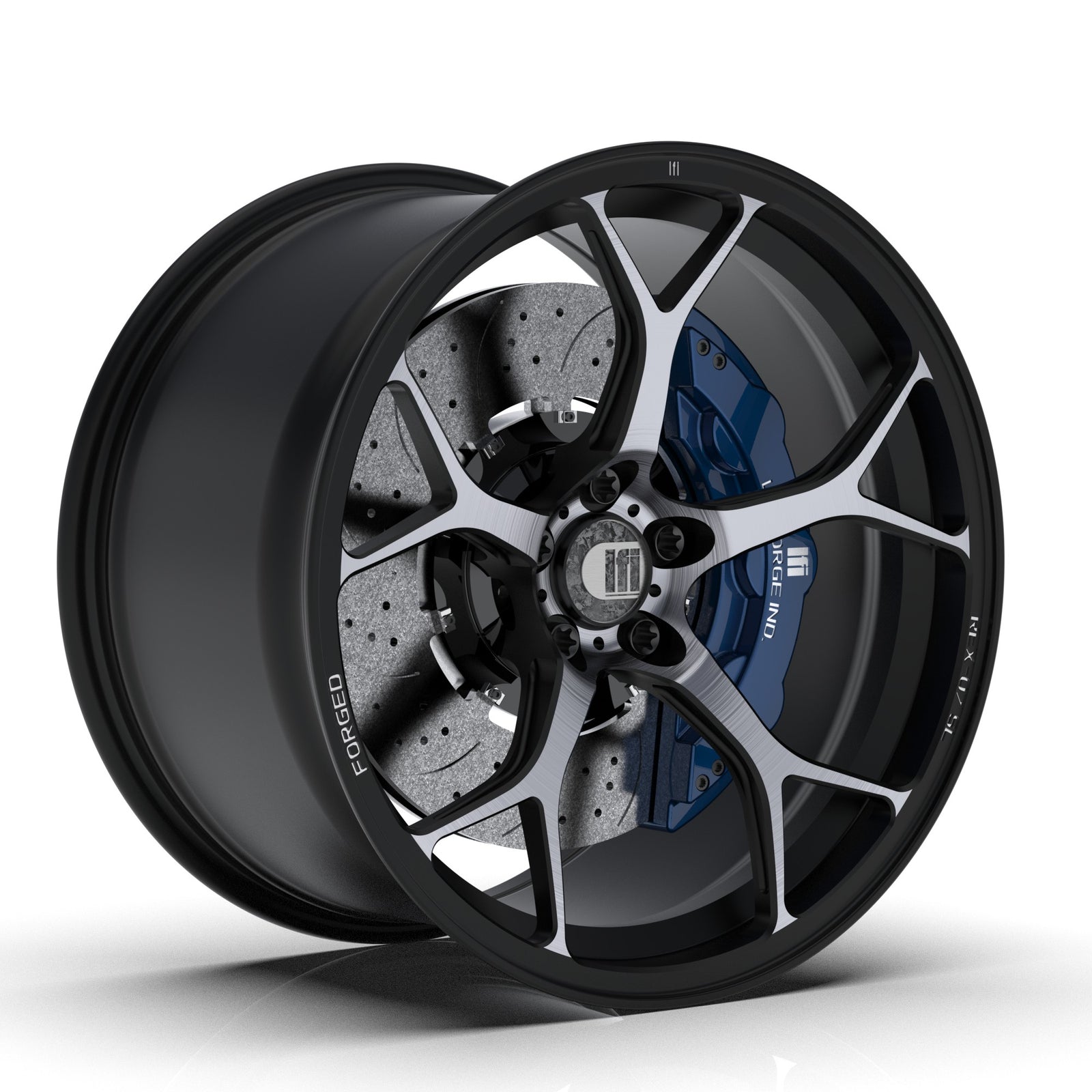
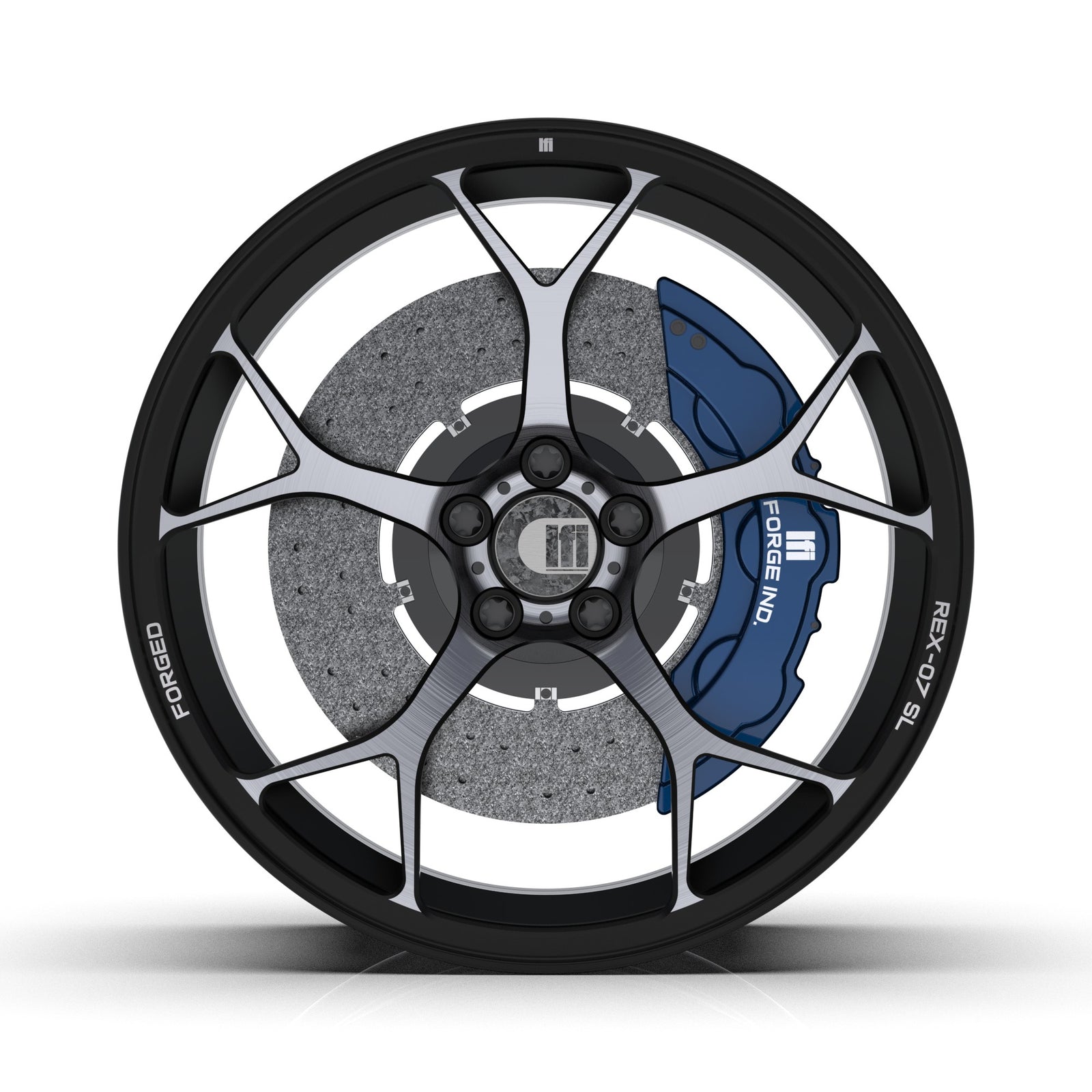
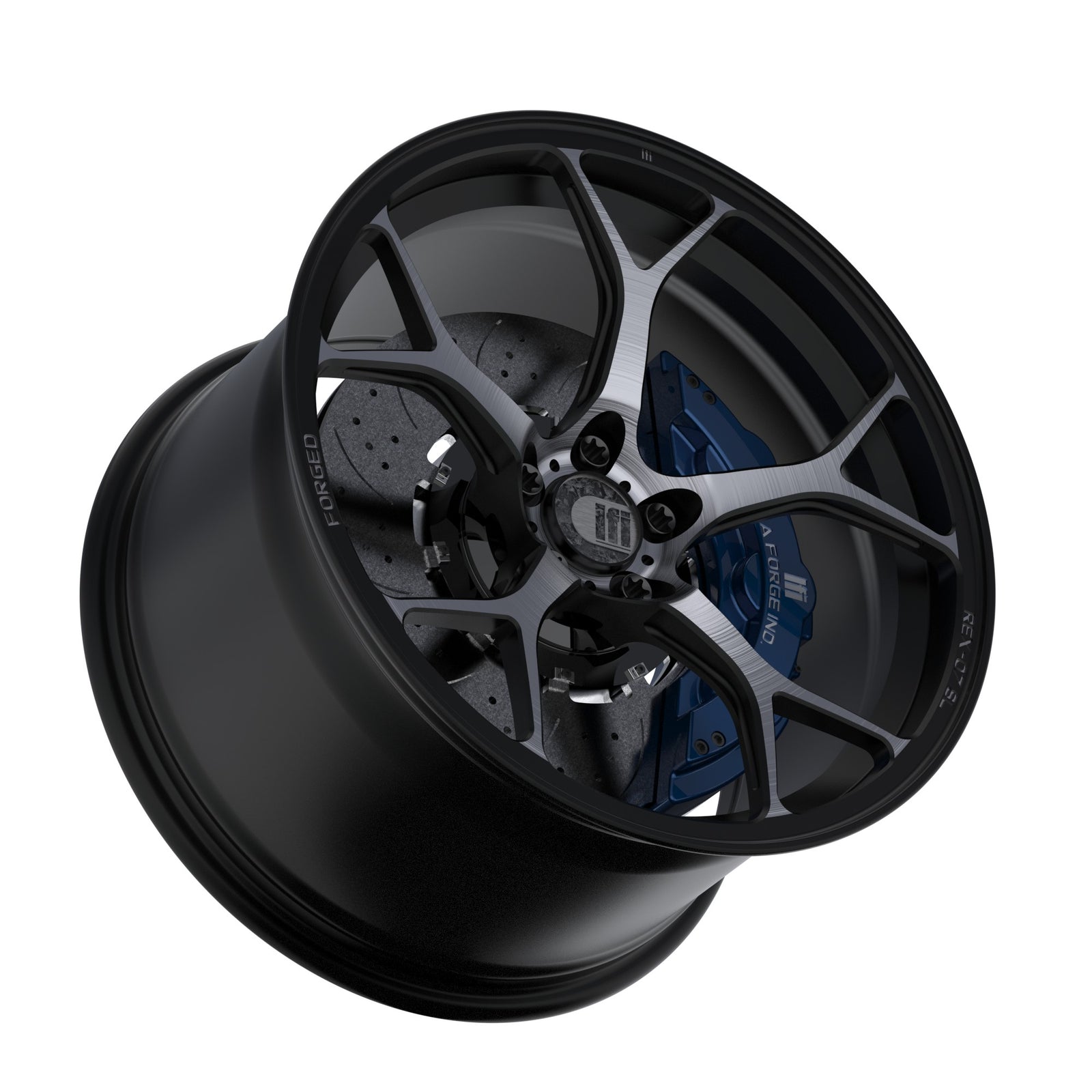
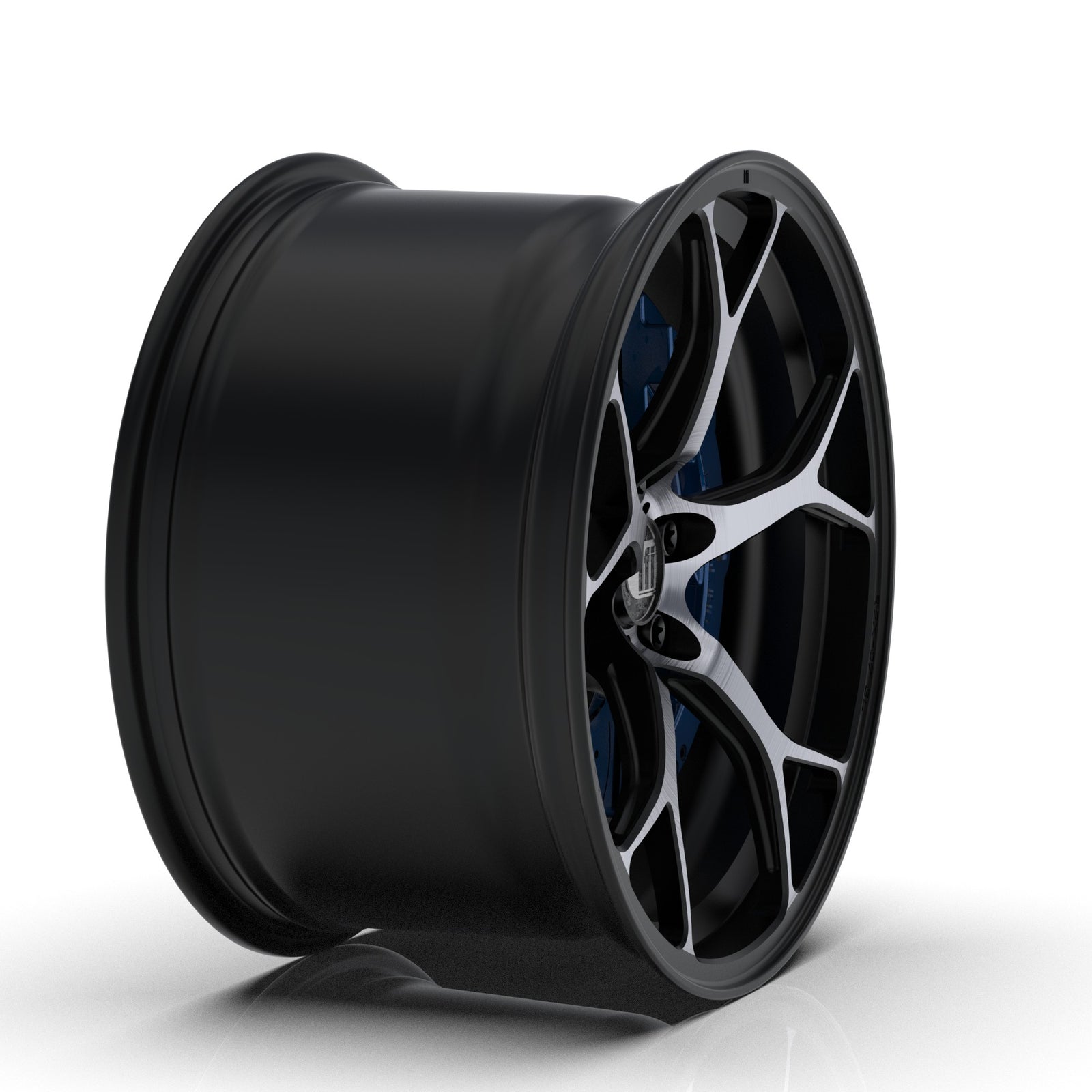
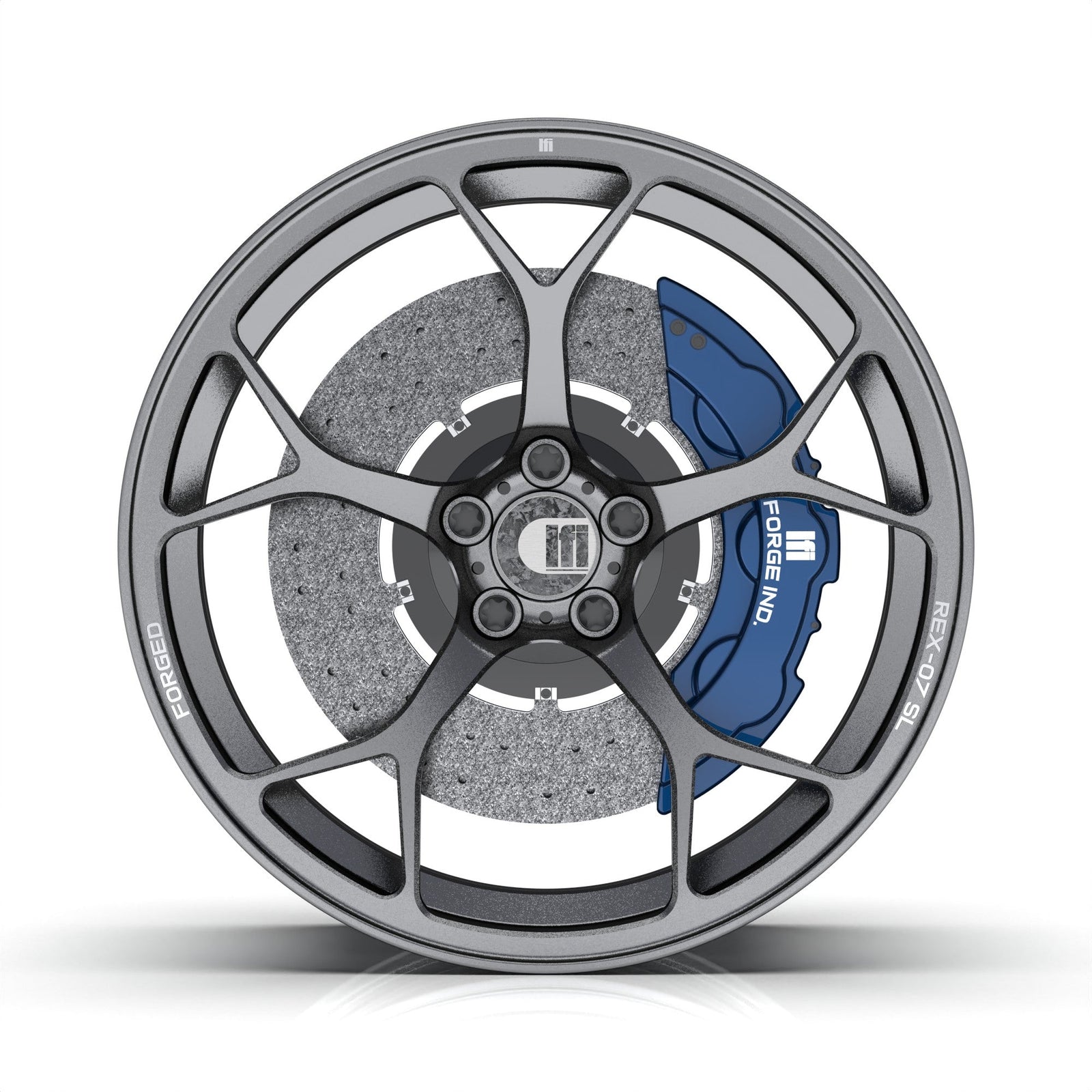
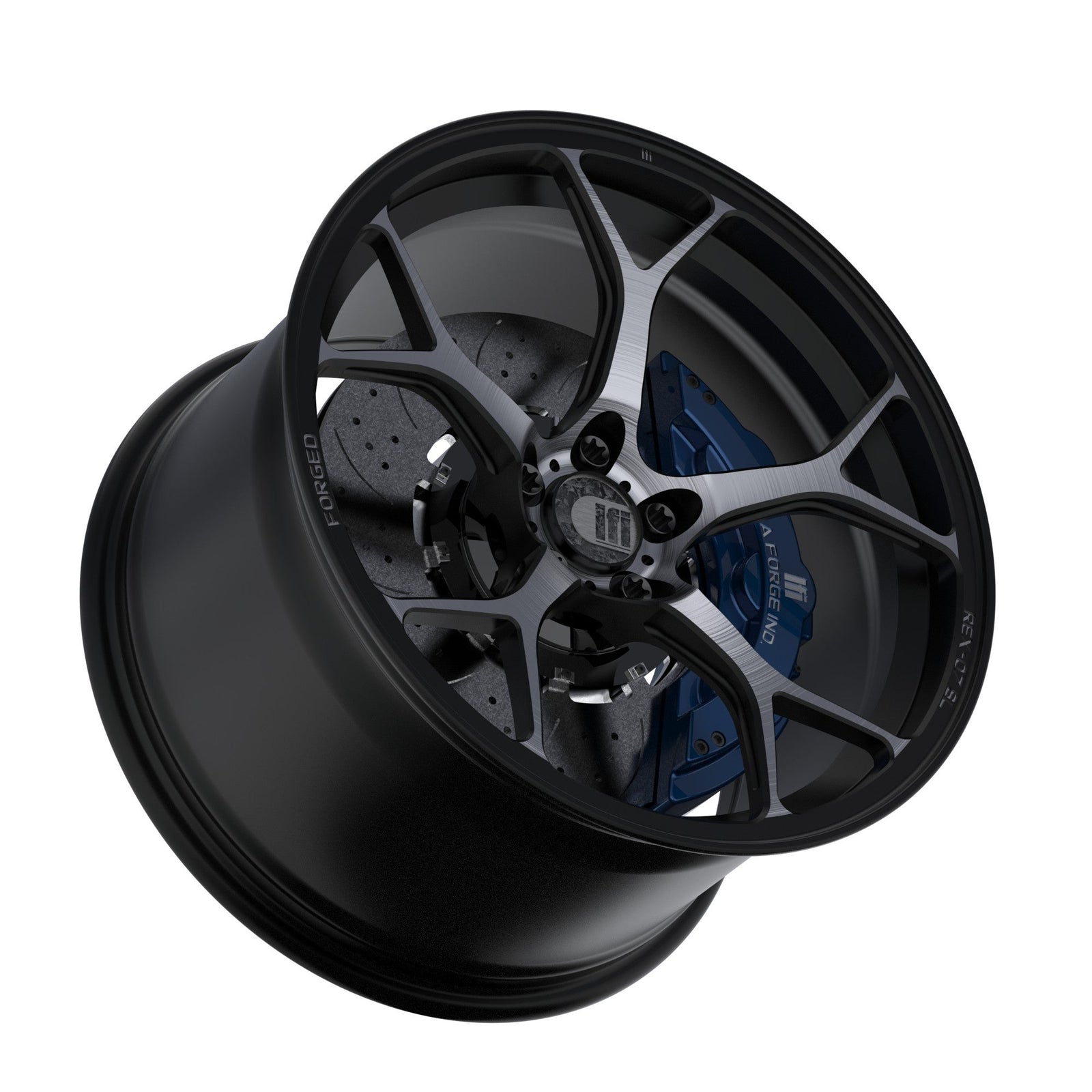
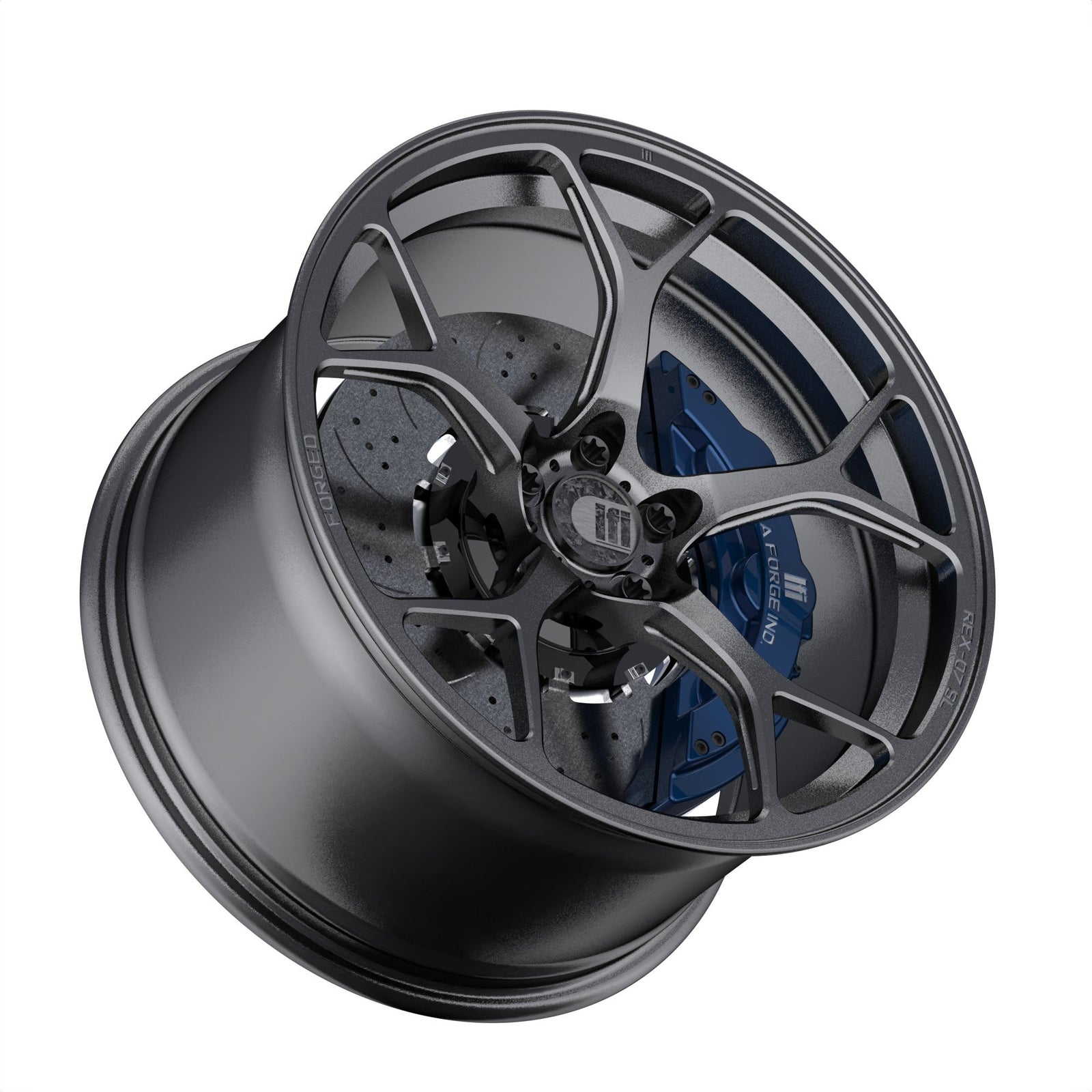
The lightest wheel we forge. Re-engineered around Takumi Beam™ asymmetric spoke architecture.

Long-shaft Y spokes over a deep forged barrel, drawn around useful mass instead of decorative subtraction.
Shown with brake package for scale; final diameter, width, offset and clearance are built around your car.
The REX-0R Superleggera is built around one principle: every gram has to earn its place.
Instead of removing material blindly, the REX-0R uses a long-shaft Y spoke, deep structural pocketing, backpad weight reduction, Counter-Lip rim reinforcement, and LFI’s proprietary Takumi Beam™ main-spoke architecture to place forged aluminium where it works hardest and remove it where it contributes least.
At the main-spoke mid-section, the latest Takumi Beam™ profile reduces local mass by approximately 28.6% compared with a solid tapered spoke section of the same outer envelope, while retaining approximately 86.9% of local bending stiffness.
η section efficiency · 0.714 mass retained after 28.6% local mass reduction · approximately 21.7% higher stiffness per gram
29% less local mass. 87% stiffness retained. 22% more stiffness per gram.
This is not lightness by subtraction. This is lightness by structure.
Some wheels are designed to look light. The REX-0R Superleggera is engineered to be light where it matters: in the structure, in the spokes, in the barrel, and in the way the wheel carries load from the hub to the rim.
A forged wheel does not become better simply because more material is removed. Cut from the wrong place, and weight reduction becomes weakness. Leave material in the wrong place, and strength becomes wasted mass. The REX-0R Superleggera is built around the balance between the two.
Its spoke architecture removes material from low-value regions while preserving the structures that actually resist cornering, braking, acceleration, and rim deflection. The result is a forged monoblock wheel that reaches the mass target without relying on fragile spoke sections or cosmetic pocketing.
At the 18×10.5J ET45 reference fitment, the REX-0R Superleggera is published at 7.3 kg per wheel. In the 17×7J reference build, it reaches 5.6 kg per wheel. Final mass is confirmed to the actual vehicle specification before production.
The main spoke of the REX-0R Superleggera uses Takumi Beam™, LFI’s asymmetric 工-section spoke architecture.
The name starts with the Japanese kanji 工, a character associated with craft, making, and engineered work. Seen as a cross-section, 工 also reads like a beam: an upper flange, a vertical web, and a lower flange. Takumi Beam™ takes that visual logic and makes it structural, using a narrow wheel-face flange, central web, and wider brake-side flange to form an asymmetric 工 profile. It reflects takumi craftsmanship: deliberate shaping, not decorative cutting.
In a forged aluminium spoke, not every gram contributes equally to stiffness. Material near the centre of the spoke does relatively little work in bending. Material near the outer surfaces does much more, because it sits farther from the bending centreline. Takumi Beam™ uses that principle to remove low-value centre mass while preserving the flange structure that resists cornering load.
The section math still matters. Bending stiffness is the E I in the beam relationship. The material is fixed, so E is fixed; the useful gain comes from I, the second moment of area:
b section width · d section depth · bending stiffness scales with the cube of section depth
Compared with a solid tapered spoke section of the same outer envelope, this profile removes approximately 28.6% of local mid-section mass while retaining approximately 86.9% of local bending stiffness. That produces approximately 21.7% higher stiffness-per-gram efficiency at the main-spoke mid-section.
Less wasted aluminium. More structural performance from every gram.
A conventional symmetric I-beam is already an efficient way to reduce mass, but it has limits. When the web becomes too thin, stress can concentrate near the spoke root, especially where the main spoke transitions into the hub and split branches.
Takumi Beam™ approaches the problem differently. Instead of making the top and bottom sides equal, the section is deliberately asymmetric. The wheel-face flange is kept narrow to reduce mass on the visible face, while the brake-side lower flange is wider and structurally reinforced. This creates a more useful spoke section for the actual load path of the wheel.
The result is not just a lighter spoke. It is a more efficient spoke. Takumi Beam™ keeps the depth that creates stiffness, removes centre mass that contributes less, and preserves support on the lower side of the section where the load path demands more structure.
That is the difference between a decorative pocket and an engineered spoke.
A wheel does not only need to survive load. It needs to resist movement.
A loaded spoke span deflects according to unsupported length cubed:
δ deflection · L unsupported length · E modulus · I second moment of area
Under cornering, the tyre contact patch tries to tilt the rim away from the hub. If the spokes allow that movement, the wheel quietly gives away precision. Camber changes. Turn-in softens. The contact patch becomes less stable.
That is why the REX-0R Superleggera uses a long-shaft Y spoke. Many split-spoke wheels divide early near the hub, creating two long, slender branches that run all the way to the rim. That layout can look elegant, but structurally it leaves the longest unsupported section as the most flexible part of the wheel.
The REX-0R reverses that logic. One deep Takumi Beam™ main spoke carries load most of the way to the rim before splitting late into two short, wide-angle branches. The long section remains the stiff member. The split section is kept short, braced, and controlled.
Same visual family. Different engineering priority.
The fork is a brace, not a flourish. Where the spoke splits, the two short branches and the rim arc between them close into a wide-based structural triangle. The point is not that a wider included angle reduces branch force for every load; for a load aligned with the spoke, it can actually raise the force each branch carries. The point is triangulation. For the in-plane off-axis loads that decide stability — especially drive and brake torque — a wide-based triangle reacts more of the load through axial tension and compression in its members, and an axially loaded member is far stiffer than a bent one:
axial stiffness AE/L vastly exceeds cantilever bending stiffness 3EI/L³ once L is large compared with the section’s radius of gyration.
A narrow, near-parallel fork has little effective triangulation, so those same in-plane off-axis loads tend to fall back into branch bending — two long cantilevers carrying the load the soft way, under the L3/EI penalty from before. Widen the angle and shorten the branches, and the fork stops behaving like two bending cantilevers and starts behaving more like a braced frame. That is what the short, wide fork buys at the rim; the long, narrow one is a soft cantilever wearing a spoke’s shape.
It’s shaped around the load that usually gets missed. Radial-only simulation never applies the twist, so the wheel looks settled. Add real torque and the spokes deform angularly, with stress piling at the spoke root — the failure path our combined-load method is built to expose. The wide fork answers it directly: two well-separated rim-side branch feet share the torque reaction across a broader base, so the same torque is carried through a wider couple and the force at each landing is correspondingly lower, while the torsionally efficient main spoke ties that reaction back to the hub. The geometry is drawn around the stress path the analysis reveals, not decorated to look like it was.
And it stays composed when inputs come fast. Natural frequency rises with stiffness over modal mass:
modal mass = the effective mass participating in that mode; material near a constrained hub contributes less to many rim/spoke modes because it moves less.
So a stiff structure with its mass kept inboard rather than out at the rim tends to push its relevant resonances upward, away from the low-frequency, high-energy range of transient cornering-and-braking inputs. The inboard placement helps twice over: mass near the hub sits where many mounted-wheel mode shapes have little displacement, so it adds less modal mass and costs less frequency than the same mass placed near the rim. Less flutter, steadier feel. Stiffness you can measure on a bench becomes confidence you feel through the wheel.
Takumi Beam™ main-spoke pocketing. The main spoke is carved into an asymmetric 工-section. The centre mass is reduced. The spoke depth is preserved. The upper and lower flange structures remain where they contribute most to bending stiffness.
Deep side-beam pocketing. Where each spoke flows into the barrel, the side beam is hollowed along its length. This reduces mass at the spoke-to-barrel transition while preserving the outer structure that helps resist bending.
Backpad pocketing. The mounting-pad backface is pocketed around the lug seats. Mass comes out from behind the bolt circle, where it does not help clamp load or hub registration. The seating faces remain intact, flat, and structurally controlled.
Counter-Lip rim edge. At the rim edge sits the Counter-Lip: a secondary forged bead positioned just inboard of the outer flange. The Counter-Lip adds a stiffening hoop where wheel deflection tends to concentrate under lateral load and impact, allowing the barrel wall to remain light without surrendering edge rigidity.
Real wheels do not see one load at a time. A wheel is not loaded only vertically. It sees vehicle weight, cornering force, tyre pressure, braking torque, drive torque, and impact input as an overlapping system.
The REX-0R Superleggera is developed around combined-load behaviour, not radial load alone.
This matters because lightweight wheels often fail not from the obvious load, but from the interaction between loads. The REX-0R is shaped around that interaction.
The long Takumi Beam™ main spoke controls the primary span. The short split branches brace the rim. The side-beam pocketing removes mass while preserving root support. The Counter-Lip reinforces the rim edge where displacement wants to collect.
Every feature has a load-path reason.
The REX-0R Superleggera is not trying to be the thinnest-looking wheel in the catalogue. A long, delicate split-spoke design can be beautiful. It can also add a small amount of compliance that some drivers may prefer on a show-focused or comfort-focused build.
The REX-0R chooses a different priority. It gives more structure to the main spoke because that is where the stiffness lives. It splits late because that keeps the compliant branch length short. It uses Takumi Beam™ because the same mass can be made to work harder when the section is shaped around the load path.
For a car built to be driven hard, that is the right trade. The wheel should hold the geometry the chassis was designed around. Not add softness of its own.
As a Founder Edition, the REX-0R Superleggera is built the way LFI would build a wheel for its own car: no unnecessary material, no generic spacer dependency, and no compromise made just to simplify fitment.
Each set is forged and machined around the final vehicle specification: diameter, width, offset, brake clearance, load target, bolt pattern, centre bore, concavity, and finish.
The geometry is not adapted after the fact. It is built around the car from the start.

One deep Takumi Beam™ main spoke carries the load most of the way to the rim before splitting into two short, wide-angle branches.
The long span stays stiff. The soft region stays short.

The main spoke uses an asymmetric 工-section with a narrow upper flange, central web, and wider lower flange.
The latest mid-section reduces local mass by approximately 28.6% while retaining approximately 86.9% of local bending stiffness, delivering approximately 21.7% higher stiffness per gram.

The spoke-to-barrel transition is hollowed along its length to reduce mass while preserving the outer structure that supports bending load.
Weight leaves the centre. Structure stays at the shell.

The backpad is pocketed around the lug seats to remove mass from behind the bolt circle while preserving the hub-mating and clamp-load surfaces.
The wheel saves weight without compromising the surfaces that keep it centred, clamped, and true.

A secondary forged bead sits just inboard of the outer rim flange.
It reinforces the edge where displacement concentrates under lateral and impact load, allowing the surrounding barrel wall to remain lighter without giving up rim-edge support.

The REX-0R Superleggera is evaluated under combined radial, lateral, torque, and tyre-pressure load.
Final structural validation and per-corner mass are confirmed before production.

Displacement is reviewed with the load cases working together, not as an isolated radial-only check.
The Counter-Lip braces the rim edge where movement wants to collect.
Approximate mass excludes centre cap and valve.
Final mass changes with diameter, width, offset, bolt pattern, brake clearance, load target, concavity, and machining depth.
The 18×10.5J ET45 reference build is 7.3 kg per wheel.
The 17×7J reference build is 5.6 kg per wheel.
Final CAD mass is confirmed before machining.
The REX-0R Superleggera is forged to your car’s load, brake package, width, offset, and clearance. Every gram with a purpose stays. Every gram without one leaves.